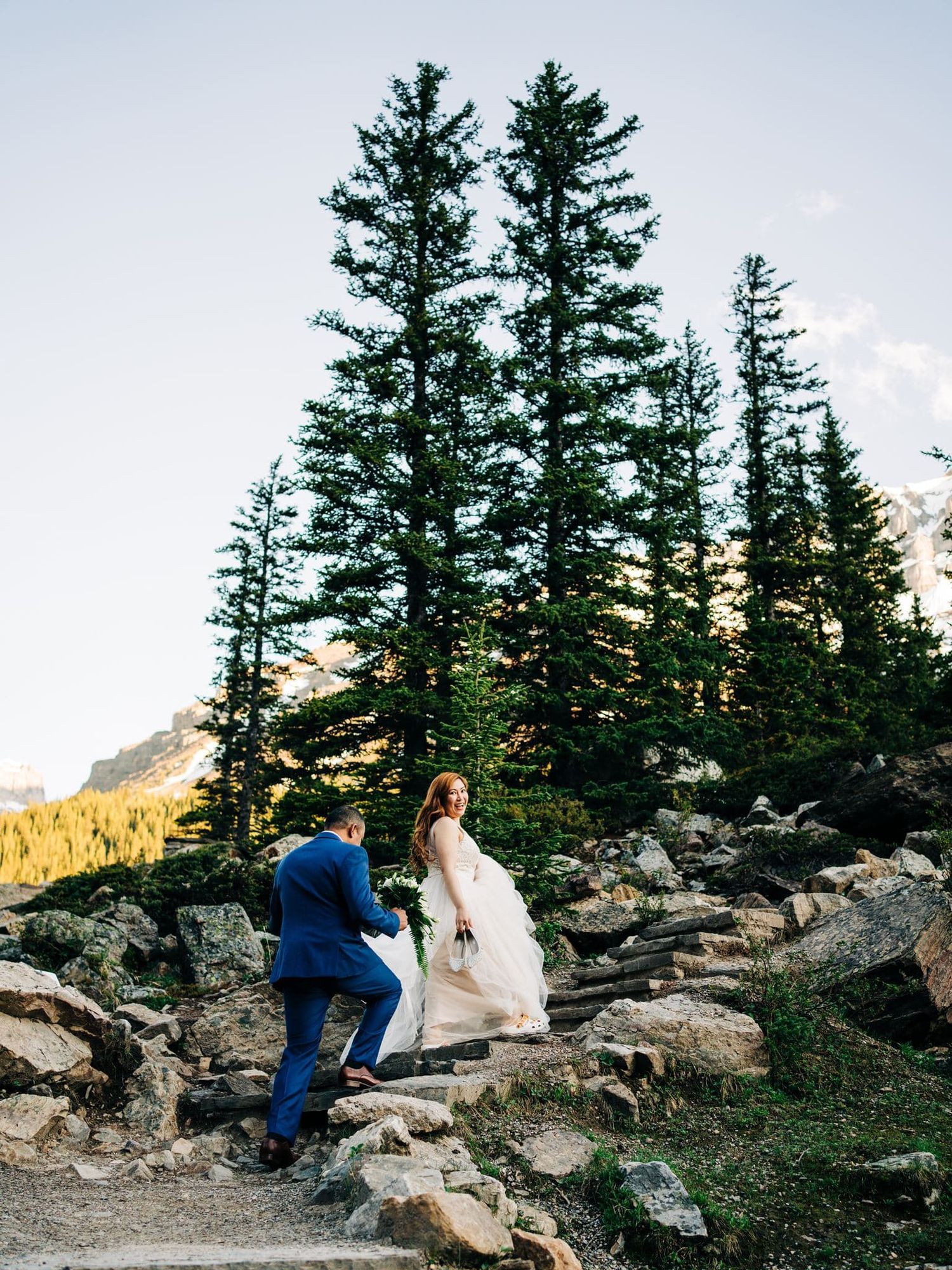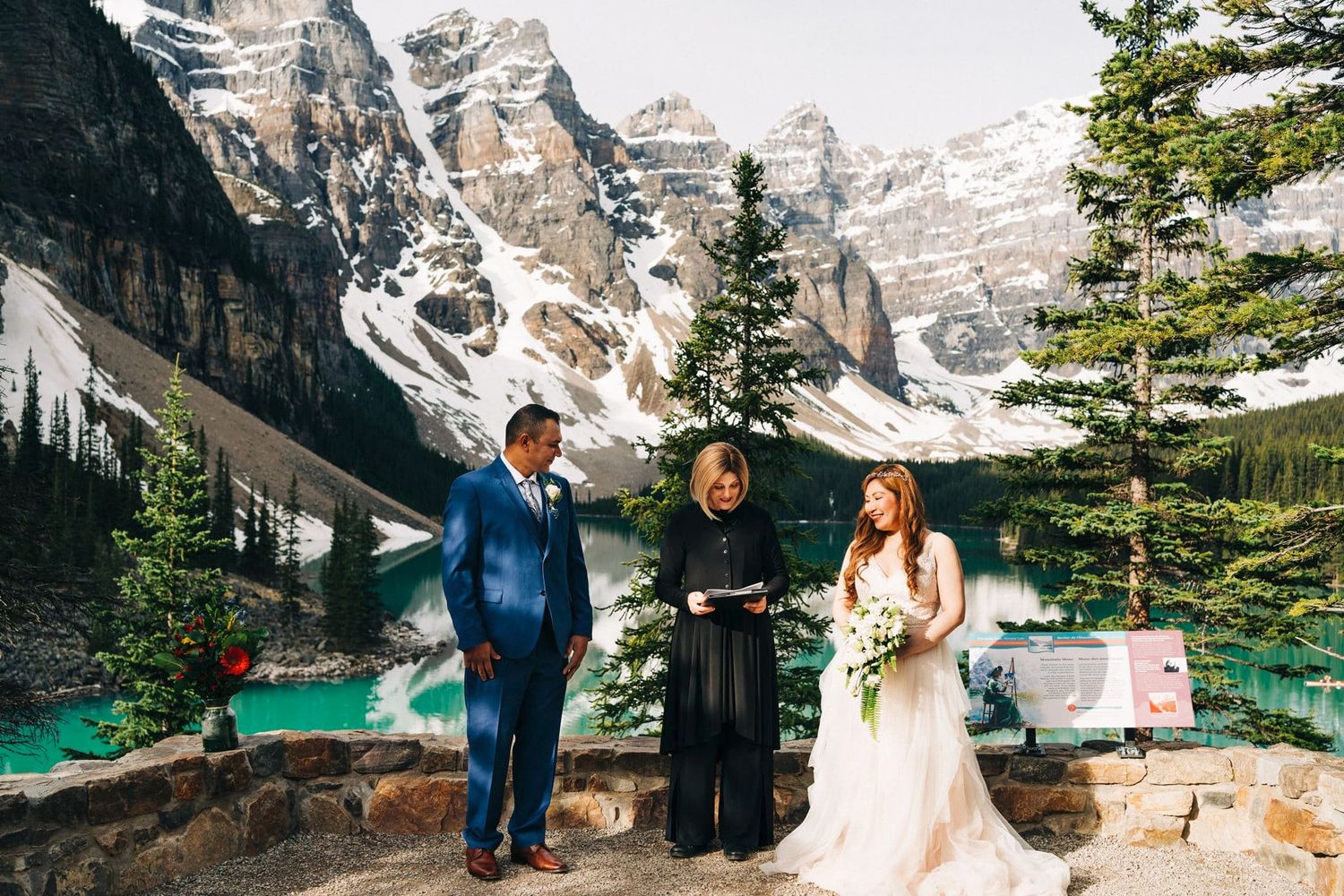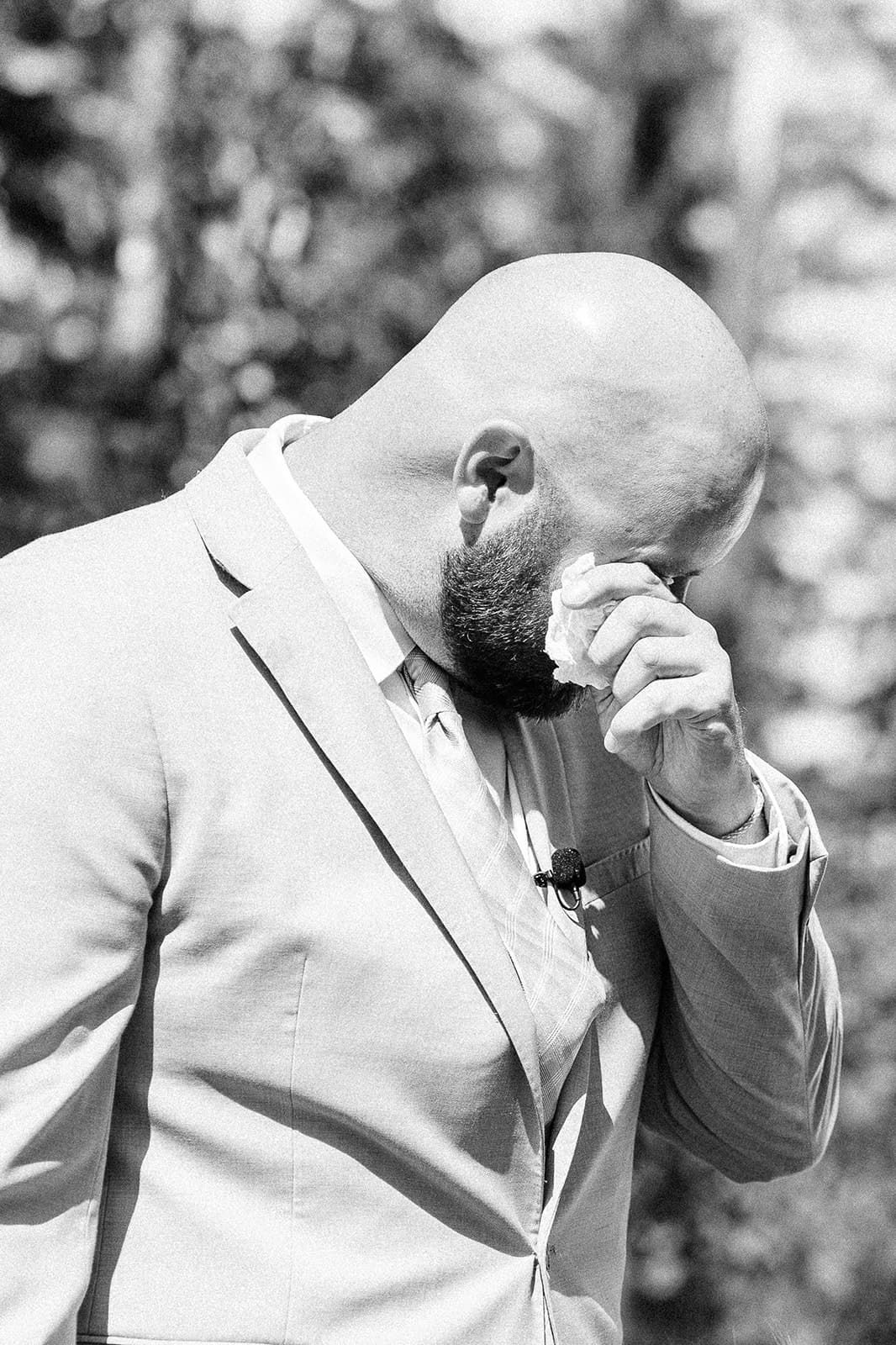
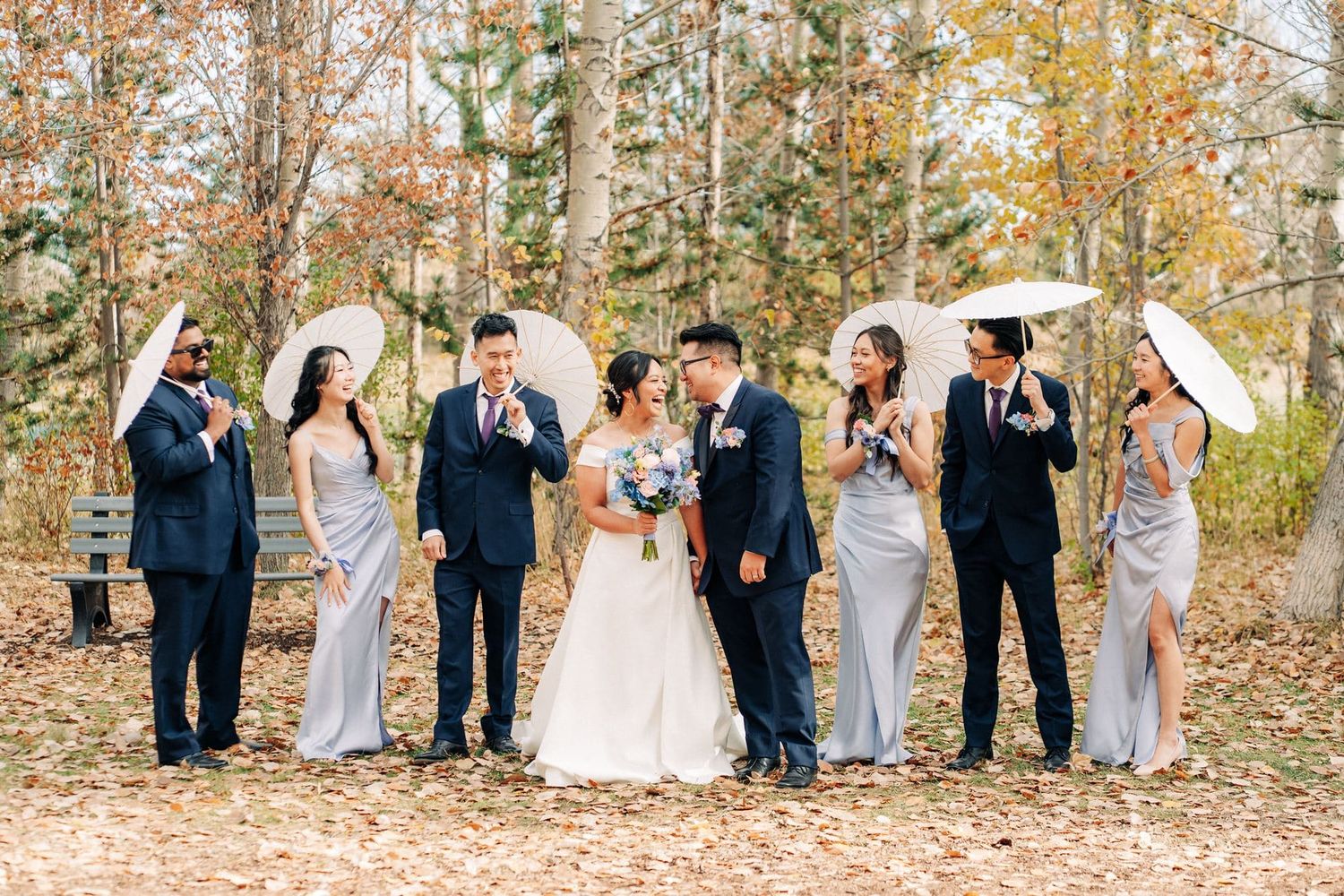
A wedding timeline can look perfect on paper and still leave you feeling rushed, pulled away from your people, and asked to smile when all you want is a quiet minute together. When you plan wedding timeline for photos with breathing room at its center, your images become less about checking off poses and more about preserving what the day actually felt like: the anticipation, the laughter, the trembling hands, and the full-hearted joy of being surrounded by your favorite people.
The best timeline does not turn your wedding into a production. It protects the experience so you can be present inside it. As photographers and filmmakers, we have seen that the most moving images rarely happen because someone scheduled a perfect moment. They happen in the space around the plan, when you have enough time to exhale and let the day unfold.
Start With Light, Then Build Around What Matters
Light shapes the feeling of your photos, especially for outdoor celebrations in Calgary, Canmore, or Banff, where mountain weather and dramatic landscapes can change quickly. But beautiful light is not a reason to sacrifice the moments that matter most. The goal is to understand when the light will be softest, then make choices that support both your vision and your comfort.
For most weddings, we recommend setting aside a dedicated portrait window of about 45 to 90 minutes. The right amount depends on your guest count, the distance between locations, your wedding party, and whether you are doing a first look. A downtown celebration with one nearby park needs a different approach than a Banff wedding where every location requires travel, parking, and a short walk.
If sunset portraits matter to you, reserve 15 to 20 minutes around golden hour. This is not meant to become a second formal photoshoot. Think of it as a small pause together. You step away from the room, take in the fact that you are married, and return to your guests with a few frames that feel quiet, cinematic, and completely yours.
Decide Whether a First Look Fits Your Day
A first look is not required, and it is not more meaningful than seeing one another for the first time at the ceremony. It is simply a timeline choice with emotional and practical benefits.
Seeing each other before the ceremony can create a private, grounding moment before the energy builds. It also allows you to complete couple portraits, wedding party photos, and many family groupings earlier in the day. That often means you can attend more of cocktail hour, enjoy your guests, and move into dinner without the pressure of a long photo block hanging over you.
On the other hand, some couples have always imagined the ceremony reveal. If that is you, honor it. Build the schedule around it rather than trying to force every portrait into a narrow gap afterward. You may choose to take individual portraits and wedding party photos before the ceremony, then reserve family photos and couple portraits for afterward. The trade-off is that cocktail hour may be shorter for you, but the emotional payoff can be exactly right.
There is no universally better choice. The better choice is the one that lets you feel most like yourselves.
How to Plan a Wedding Timeline for Photos Without Feeling Rushed
The easiest way to create a calm photo timeline is to work backward from your ceremony time and treat travel, transitions, and real life as part of the schedule. Hair and makeup runs late sometimes. A parent needs a quiet minute. The elevator is slow. A mountain road has traffic. None of these things are failures, but they become stressful when a timeline has no margin.
For getting-ready coverage, allow more time than you think you need. Detail photos of your attire, stationery, rings, and meaningful heirlooms usually take 20 to 30 minutes, ideally while hair and makeup is still finishing. Getting dressed can take another 20 to 30 minutes, especially if you want space for a first look with a parent, sibling, or wedding party.
Family photos deserve an intentional plan too. We typically suggest 20 to 30 minutes for immediate family combinations, depending on the size and complexity of each group. Ask a trusted relative who knows everyone to help gather people. This keeps you from spending your newlywed minutes searching for an uncle who has wandered toward the bar.
When mapping the day, remember to include these often-missed transitions:
- Travel time between getting-ready locations, the ceremony, portrait sites, and reception
- Five to 15 minutes of buffer before every major event
- Time to refresh makeup, drink water, eat something, and use the restroom
- A few unscheduled minutes after the ceremony, when hugs and happy tears naturally happen
Those small pockets are where the day becomes human. They also give us room to document the in-between moments that cannot be recreated: your friends adjusting your veil, your grandparents holding hands during dinner, or the look you share before entering the reception.
Protect the Moments You Cannot Repeat
Some parts of a wedding have fixed start times. Your ceremony, speeches, first dance, and venue access may be non-negotiable. Other parts are more flexible, and that is where a thoughtful timeline gives you freedom.
Avoid stacking major moments back-to-back whenever possible. If family portraits end at 5:00 and cocktail hour begins at 5:00, you may spend the next half hour being pulled in several directions. If your grand entrance is scheduled the moment dinner ends, there is little room for your film team to reset, for your guests to settle, or for you to have a private breath together.
Give yourselves at least 10 to 15 minutes after the ceremony before formal photos begin. You will want to hug people. You may need to sign paperwork. You may simply need to look at each other and say, “We did it.” That pause is not wasted time. It is part of the memory.
The same is true of reception coverage. If you value candid dance floor images, schedule enough open dancing for the energy to build. If emotional speeches are central to your story, ask speakers to keep within a reasonable time range and plan them when guests are attentive. A room that is hungry, tired, or waiting for the next course can change the atmosphere of even the most beautiful toast.
Build a Timeline That Supports Photo and Film Together
When photography and videography work as one coordinated team, the day moves with more ease. We can anticipate each other, capture different angles without crowding you, and make sure a meaningful moment is preserved in both stillness and motion. Still, photo and film need a timeline that recognizes the realities of each format.
For example, a letter reading or private vow exchange needs quiet and enough time for emotion to arrive naturally. Rushing through it because the car is waiting can make the experience feel performative. We would rather give you a calm corner, a few minutes of privacy, and the freedom to read, cry, laugh, or pause without anyone filling the silence.
If you have chosen a Same-Day Edit film, share your reception timeline early. Creating a cinematic highlight film to play before the night ends means our team needs a clear window to edit while coverage continues. This can work beautifully when the reception flow includes dinner service or an extended guest activity before the reveal. The result is more than a screening. It is a room full of people seeing the emotional shape of your day together while they are still living it.
A Sample Flow for an Unhurried Wedding Day
Every celebration is different, but a ceremony beginning around 4:00 p.m. might allow for getting-ready coverage beginning around 1:00 p.m., a first look at 2:30, wedding party and couple portraits from 2:45 to 3:40, and a few quiet minutes before the ceremony. Family photos can happen immediately afterward, followed by a brief sunset portrait break during cocktail hour or between dinner courses.
Without a first look, getting-ready, individual portraits, and wedding party photos can take place before the ceremony. Afterward, plan approximately 20 to 30 minutes for family groupings, 30 to 45 minutes for couple portraits, and a little time for the natural congratulations that follow. If cocktail hour matters deeply to you, consider extending it slightly so you can join it without feeling like you are arriving at the end.
These are starting points, not rules. A winter wedding with an early sunset needs an earlier portrait plan. A summer mountain wedding may offer more daylight but require extra travel time. A small guest list may allow more flexibility, while a large family and a multi-location celebration need more structure.
Let the Timeline Serve the Feeling
A well-planned wedding day should not feel like a series of appointments with a camera. It should feel like your celebration, with room for the parts you cannot schedule: the shaky breath before walking down the aisle, the spontaneous dance with your best friend, the way your partner reaches for your hand under the dinner table.
Share your priorities with your photo and film team early. Tell them if being present at cocktail hour matters more than a long portrait session, if sunset is non-negotiable, or if you want a slower morning with your closest people. At Conquer Your Journey, those conversations help us build a plan that gives your story the space it deserves.
Leave room for joy to interrupt the schedule. The photographs you treasure most may be the ones that happen when nobody is looking at the clock.