The first number you see can feel shocking. One photographer quotes $2,500, another starts at $6,000, and suddenly wedding photography prices seem impossible to compare.
That confusion usually comes from looking at the total before looking at what the total actually holds. You are not only paying for a person with a camera to show up on a Saturday. You are investing in how your wedding day is remembered, how honestly it is documented, and whether the images still feel like you years from now.
Why wedding photography prices vary so much
There is no single industry standard, because no two wedding photography experiences are truly the same. A short weekday celebration with one photographer and a simple gallery will naturally cost less than a full wedding weekend with multiple locations, timeline support, second coverage, and extensive editing.
Experience plays a major role. A newer photographer may charge less while building a portfolio, while a seasoned team often prices higher because they bring consistency, problem-solving, artistic direction, and the ability to stay grounded when timelines shift or weather changes. On a wedding day, that calm expertise matters more than many couples expect.
Style also affects price. Documentary-focused photographers who are skilled at capturing real moments without forcing them often spend years refining that instinct. Candid work can look effortless, but it takes timing, observation, and a strong understanding of light, emotion, and story.
Then there is the work you do not see. Culling thousands of images, editing each gallery with care, backing up files, maintaining professional gear, carrying insurance, communicating throughout planning, and designing a client experience all shape the final cost.
What is usually included in wedding photography prices?
The phrase sounds simple, but wedding photography prices can include very different things from one studio to another. That is why the package headline alone never tells the full story.
Most collections are built around coverage time. That might mean six hours, eight hours, ten hours, or full-day coverage. The amount of time you book affects not just how many photos you receive, but which parts of the story are preserved. If you only book enough time for the ceremony and portraits, you may miss the quieter beginning of the day or the energy of the dance floor later on.
Many photographers also include planning support. This can mean timeline guidance, location recommendations, family photo organization, and advice on how to create space for moments to unfold naturally. That support often makes the day feel smoother, which directly affects the images.
Editing is another major part of the value. A finished gallery is not a memory card dump. It is a carefully shaped collection of images with consistent color, exposure, storytelling flow, and emotional pacing. Some photographers deliver a few hundred images, others many more, but the stronger question is whether the gallery feels intentional.
You may also see second photographers, engagement sessions, albums, travel, rehearsal dinner coverage, or photo and video together in one custom quote. Each addition changes the scope, and therefore the price.
Coverage time changes more than couples expect
Time is one of the biggest cost drivers, but it is also one of the most emotional decisions. Couples often try to trim coverage to protect the budget, then later realize they have cut out meaningful parts of the day.
The getting-ready hours often hold some of the most intimate moments - a parent fastening a dress, private vows read in silence, nervous laughter, the room settling before everything begins. The final hour of the night can hold something completely different: relief, celebration, and the kind of joy that only appears once the formalities fall away.
If your wedding matters to you as a full experience rather than a checklist of key events, enough coverage time usually matters more than extras.
A second photographer is not always essential, but sometimes it is
Some weddings flow beautifully with one photographer. Others really benefit from two. If you are getting ready in separate locations, planning a large guest count, hosting a fast-moving timeline, or wanting more layered storytelling, a second photographer can add meaningful depth.
This is not just about receiving more photos. It is about being able to hold two truths from the same moment. One frame can show the partner at the altar trying not to cry, while another captures the walk down the aisle. Both belong to the story.
Average price ranges and what they often mean
Prices vary by market, experience level, and scope, but broad ranges can still help set expectations.
At the lower end, couples may find newer photographers or limited coverage options around $2,000 to $3,500. This can work well for smaller weddings or couples with simpler needs, but the trade-off may be less experience, less planning support, or a less refined gallery.
In the middle range, often around $3,500 to $6,000, couples typically find established professionals with stronger portfolios, more polished workflows, and more complete collections. For many weddings, this is where value and quality begin to feel more balanced.
Above that, premium studios often start around $6,000 and can rise significantly depending on travel, multi-day events, albums, or combined photo and video coverage. In this tier, couples are usually investing in a distinct artistic voice, a more personalized experience, and a deeper level of storytelling.
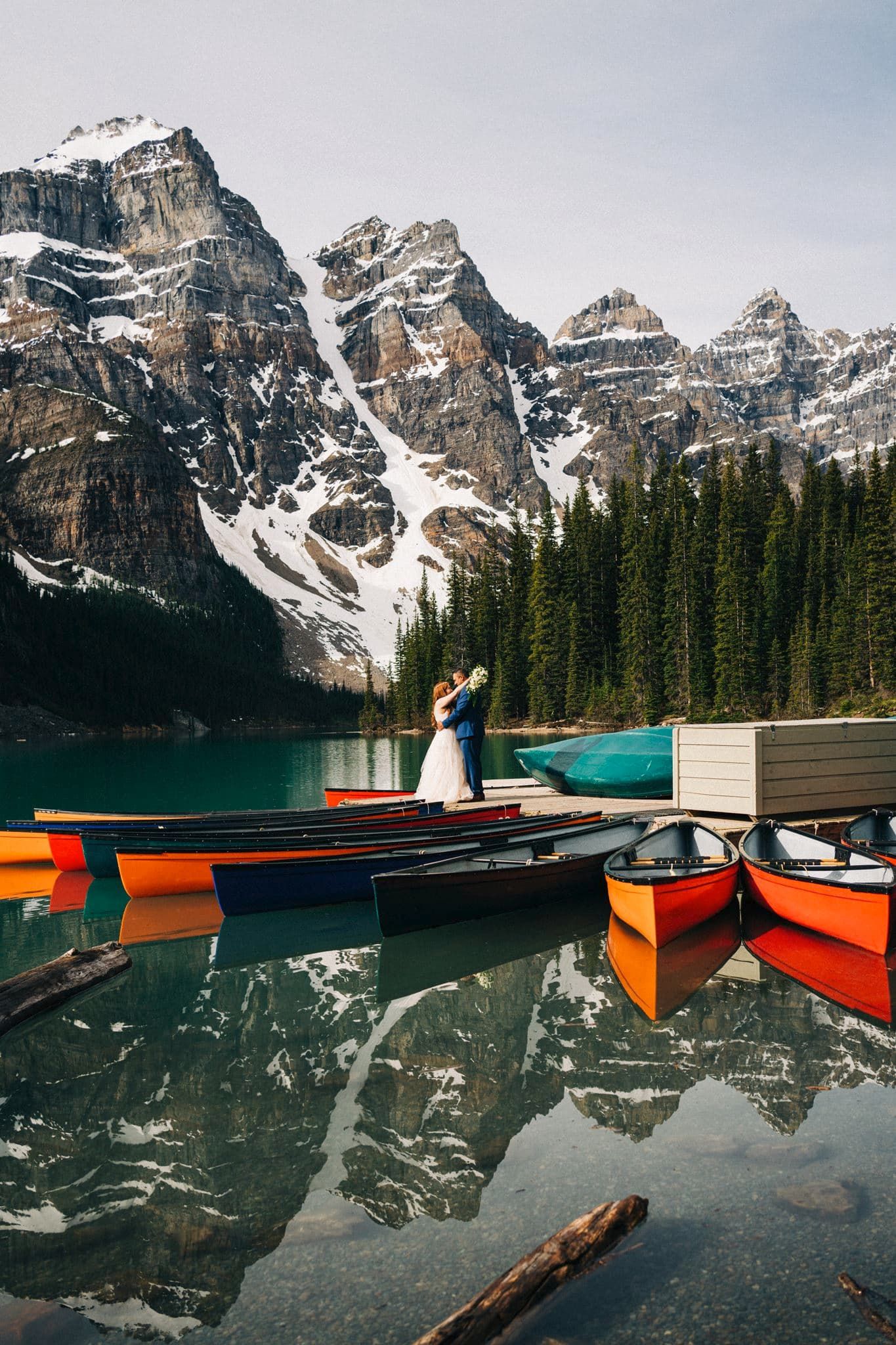
In places like Calgary, Canmore, and Banff, prices can climb further because mountain weddings often involve travel, permits, complex logistics, variable weather, and longer production days. Beautiful locations bring incredible atmosphere, but they also require more from the team documenting them.
What actually makes a photographer worth the price
The right fit is not always the lowest quote or the longest package list. It is the photographer whose work still feels alive after the wedding has passed.
Look at how they capture people, not just details. Anyone can photograph a table setting beautifully. The harder question is whether they can preserve your partner's expression during the vows, the way your friends throw their heads back laughing, or the exact feeling of walking into your reception and seeing everyone you love in one room.
Consistency matters too. Do full galleries feel strong from beginning to end, or do only the highlight images stand out? Real wedding days involve dark venues, harsh sun, cramped getting-ready spaces, schedule delays, and emotional unpredictability. A worthy photographer can navigate all of it without losing the heart of the story.
And then there is chemistry. If you want your wedding documented honestly, you need to feel safe being yourselves. The best images often come when you are not performing, which means trust is part of the investment.
How to compare wedding photography prices without getting lost
Start by comparing scope before cost. Ask how many hours are included, whether travel is built in, whether a second photographer is part of the collection, and what the final delivery looks like. A lower price is not necessarily lower value, but it may reflect a very different level of service.
Next, ask to see full galleries. Highlight reels are beautiful, but they do not show whether a photographer can tell a complete story. Pay attention to emotion, consistency, and how people look in unscripted moments.
It also helps to ask how the photographer approaches the day. Some are highly directive. Others work in a more observational, story-driven way. Neither is automatically wrong, but one may fit your personality and priorities far better.
If photo and video both matter to you, asking about bundled coverage can make sense. A team working together under one creative vision often creates a more cohesive experience, both on the wedding day and in the final memories you receive.
When spending more makes sense and when it may not
It depends on what you value most. If your wedding is intimate, short, and intentionally simple, you may not need a full premium package. A smaller collection could be exactly right.
But if you care deeply about emotional storytelling, if your guest list includes people whose presence means everything, or if your day has many moving parts, spending more often protects the memories that cannot be recreated. Once the flowers are gone and the music fades, your images become one of the few ways to return.
That is why many couples stop thinking about photography as a line item and start thinking about it as a legacy choice. Not because expensive always means better, but because the right coverage keeps the feeling of the day intact.
At Conquer Your Journey, that is the heart of how we see it. The real value is not in perfectly posed proof that the day happened. It is in preserving what it felt like to live it.
If you are weighing wedding photography prices right now, give yourself permission to look beyond the number. Ask what kind of memories you want to hold in your hands later, and choose the team that can honor them with honesty.