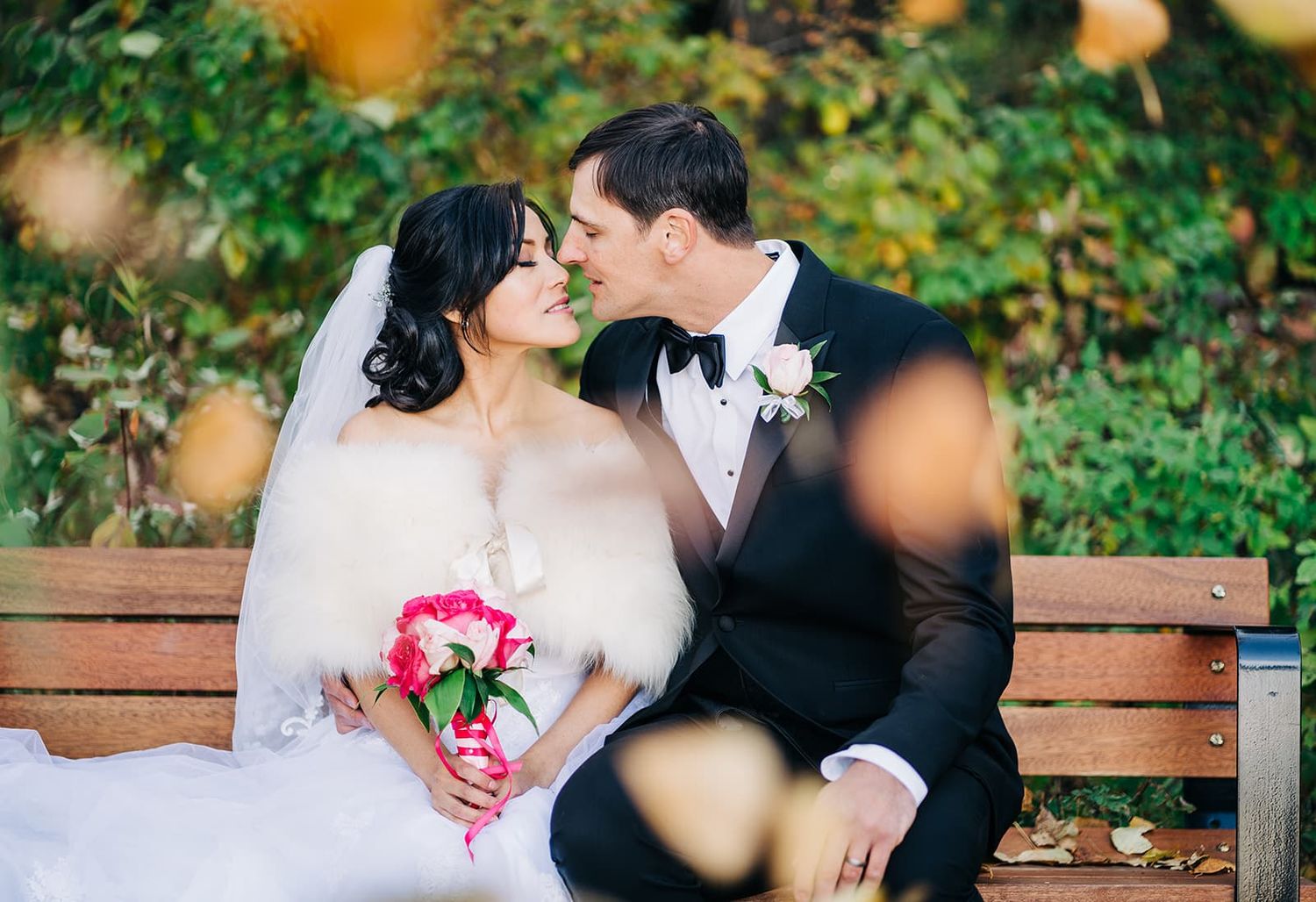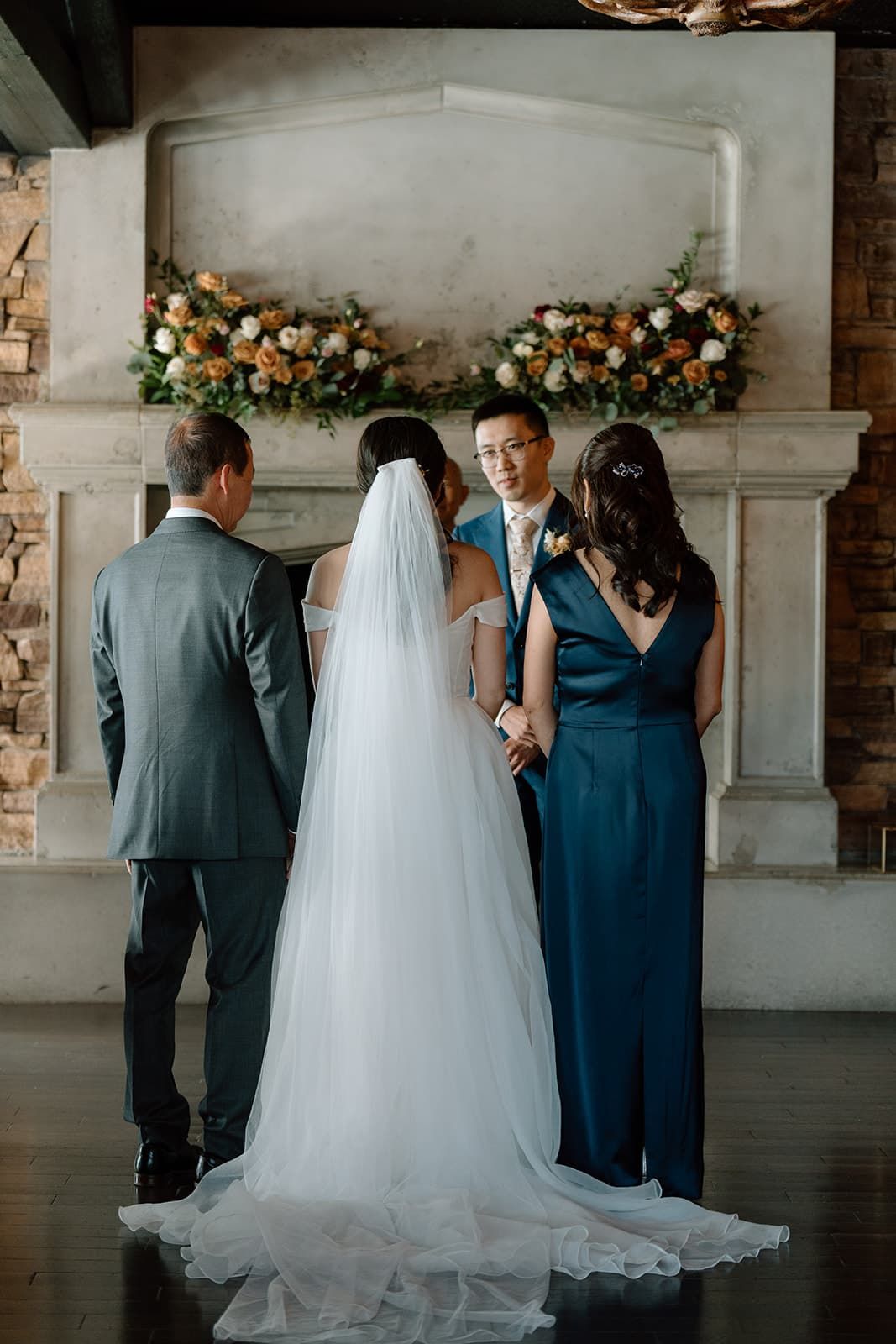
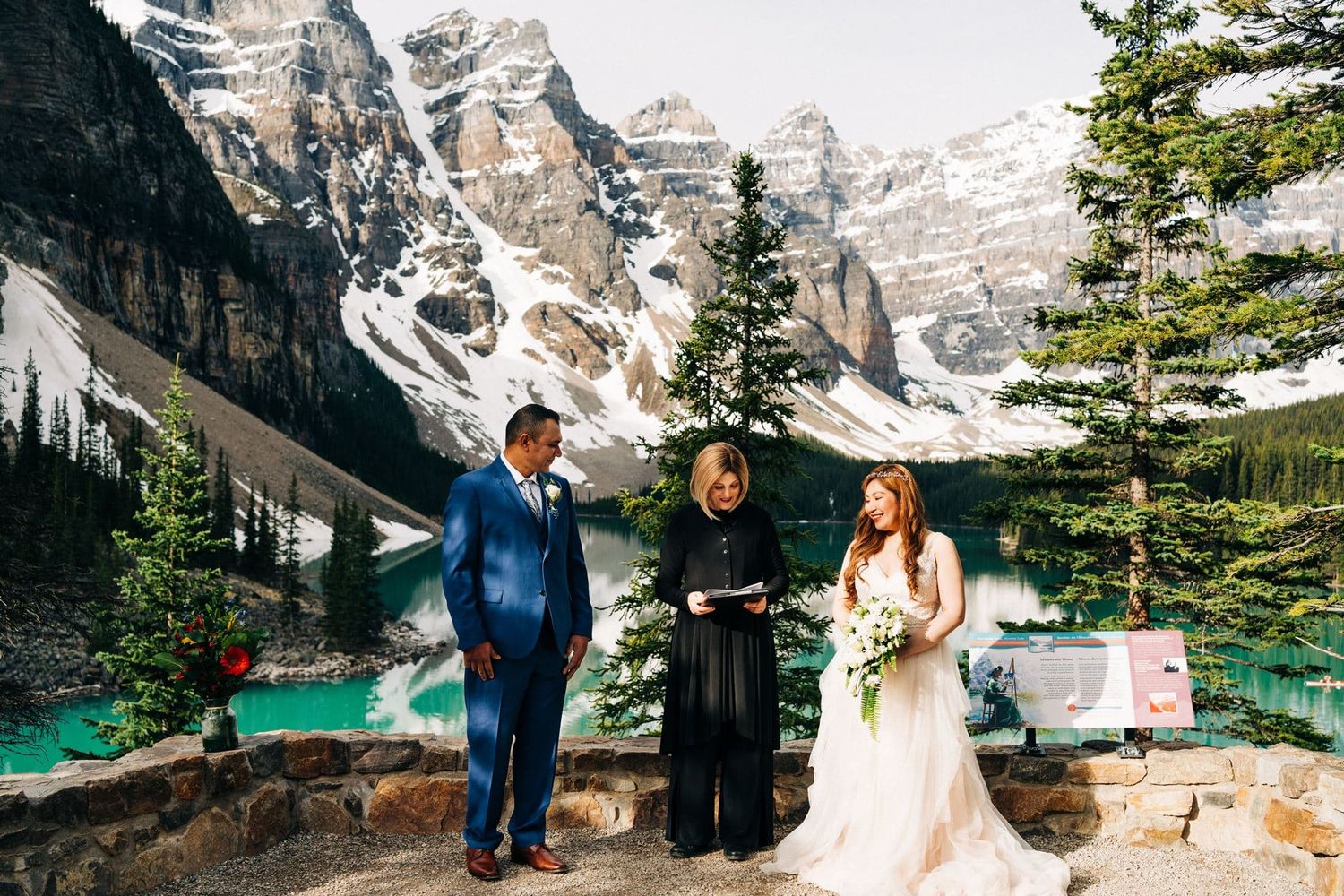
A Banff documentary ceremony example is not a perfectly arranged scene beneath the mountains. It is the moment the wind catches your veil just as your partner starts to cry. It is your father taking a breath before walking you down the aisle. It is a laugh that slips into your vows because the weather had other plans, and somehow, that makes the promise feel even more like yours.
For couples choosing Banff, the setting is extraordinary. But the scenery should never become the whole story. Your ceremony is where the emotional shape of the day reveals itself: the people you chose, the words you meant, the nerves you carried, and the relief of finally finding each other at the end of the aisle.
What Documentary Ceremony Coverage Actually Looks Like
Documentary wedding coverage begins with restraint. We are not asking you to pause halfway down the aisle, turn toward a particular peak, or repeat the first look your eyes make when you see each other. Those moments only happen once. They deserve to unfold without a camera team pulling focus from them.
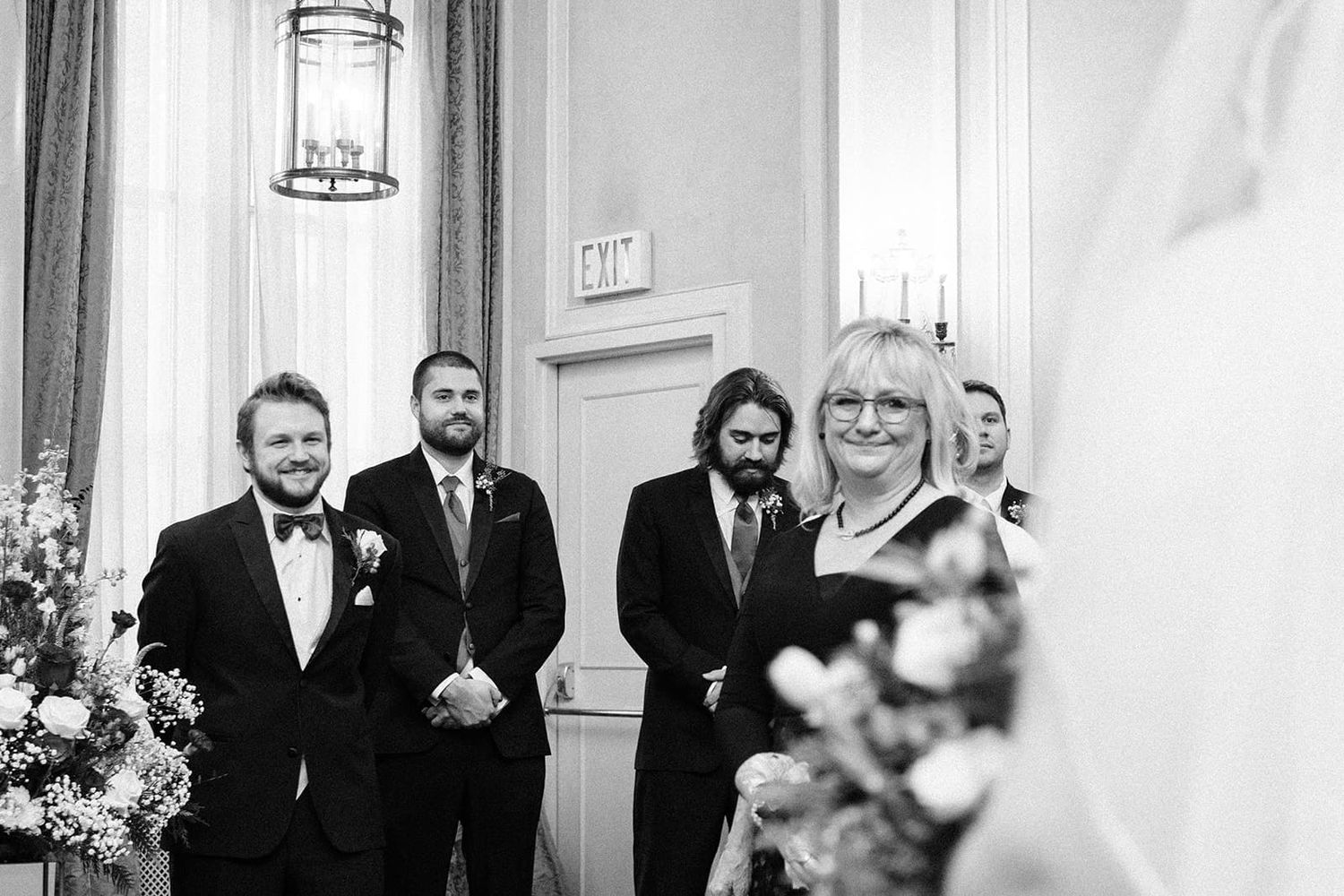
Instead, we arrive knowing the ceremony plan, the family dynamics, the light, and the landscape. Then we watch closely. One of us may stay with the partner waiting at the front while the other quietly follows the processional. That coordinated perspective matters because a ceremony is never only one story. It is the person walking toward the altar and the person trying not to cry as they wait.
The result is cinematic, but not because every frame is manufactured. It is cinematic because real emotion has its own rhythm. A trembling hand. A grandmother smiling through tears. The pause after a vow lands. Those are the details that bring you back years later.
A Banff Documentary Ceremony Example, Moment by Moment
Picture an intimate outdoor ceremony in Banff. The mountains sit behind the altar, softened by cloud cover. Guests gather in warm layers, and the forecast has moved from sunshine to a light, unpredictable mist. There is no need to pretend this is a problem. It is part of the day you will remember.
Before the aisle
Before guests turn toward the ceremony site, there is often a quiet pocket of truth worth preserving. One partner reads a note alone. The other takes a slow breath with their wedding party. A parent straightens a jacket collar, then holds on for one extra second.
These are not scenes we stage. We simply give them room. Minimal direction can be helpful when a timeline needs structure, but the goal is never to choreograph feeling. We want you to have enough space to actually feel it.
The processional
As the music begins, a documentary approach catches both the movement and the reaction. The wide view honors the place: the aisle, the gathered guests, the towering landscape. The closer angle protects what could otherwise disappear: a partner's face changing as they see you, a sibling reaching for a tissue, a flower child suddenly deciding to wave at everyone.
A Banff ceremony can be grand in scale, but the most lasting images are often intimate. The mountain view gives the frame context. Your expression gives it meaning.
The vows
Vows are where couples often feel most exposed. That is precisely why quiet coverage matters. Nobody should have to perform their emotion toward a lens while trying to speak the most personal words of their life.
We stay unobtrusive and let the moment breathe. If your voice cracks, it belongs in the film. If you laugh through tears, it belongs there too. If the wind makes it difficult to hold your paper steady, that becomes part of the memory rather than something to hide.
For video, clean audio is essential, but it should never come at the expense of comfort. Thoughtful preparation allows your words to be heard later without turning the ceremony into a production set. For photography, the attention shifts between the hands, the faces, and the guests who are hearing those promises alongside you.
The unexpected beat
Real ceremonies have small surprises. A ring may take a second longer to slide on. The officiant may share a story that catches everyone off guard. A sudden burst of rain may send guests reaching for umbrellas while you both choose to keep standing there, smiling.
These are not imperfections to edit out of your wedding story. They are proof that it was lived. A documentary film and gallery should preserve the texture of the day, not replace it with a version that never existed.
The walk back down the aisle
After the kiss, the energy changes immediately. The tension releases. You are married, your guests are cheering, and for a few seconds, the rest of the timeline does not matter.
This is where candid coverage is especially powerful. We capture the clasped hands, the sudden laughter, the glance that says, “We did it,” and the people you love rising around you. It is joy in motion, and it cannot be recreated with the same electricity later.
Why Banff Requires a Flexible Ceremony Mindset
Banff offers beauty that no studio can replicate, but it also asks couples to welcome a little uncertainty. Light shifts quickly. Wind picks up. A bright afternoon can turn moody in minutes. The trade-off is real: an outdoor mountain ceremony rarely behaves like a controlled indoor venue.
For the right couple, that unpredictability is not a compromise. It is part of the experience. Low clouds can make the mountains feel more dramatic. Soft rain can create a closeness between you and your guests. A gust of wind can create movement in a veil or dress that feels alive on film.
That said, embracing documentary storytelling does not mean abandoning a plan. A strong team prepares for weather, understands the ceremony layout, coordinates respectfully with your planner and officiant, and knows when to adjust without adding stress. The best coverage feels effortless because the preparation happened quietly behind the scenes.
How to Create Space for Real Ceremony Moments
If you want your ceremony to feel honest on camera, build a timeline that does not rush every meaningful second. Give yourselves a few minutes before walking down the aisle. Let your officiant know you value a ceremony that feels personal rather than overly scripted. Choose readings and vows that sound like you, not like a version of yourselves you think a wedding requires.
Consider the guest experience, too. An unplugged ceremony can help the people closest to you stay present instead of watching through a phone screen. It also gives your photographer and filmmaker a clearer view of the reactions that matter. This is not about policing your guests. It is about inviting them into the moment with you.
When planning your aisle and altar placement, think beyond the mountain backdrop. Consider where the light will fall, where your guests can be comfortable, and where you will be able to see one another clearly. The most beautiful view in Banff means little if you are squinting into harsh sun or feeling disconnected from the people around you.
When a Same-Day Edit Makes the Ceremony Echo Longer
For couples who want to share the feeling while it is still fresh, a Same-Day Edit can bring the ceremony back into the room before the reception ends. Imagine your guests watching your vows, the walk down the aisle, and the first rush of married joy only hours after they witnessed it in person. The experience becomes collective all over again.
At Conquer Your Journey, this is never treated as a flashy interruption. It is an opportunity to let the emotional heart of the day echo through the celebration. When the room responds with laughter, tears, and applause, you get to see how deeply your story has already touched the people who came to honor it.
Your ceremony does not need to be flawless to be unforgettable. Let the weather move, let the voices shake, let the laughter arrive at the wrong time. The details you cannot plan are often the ones that make your marriage story feel unmistakably, beautifully yours.