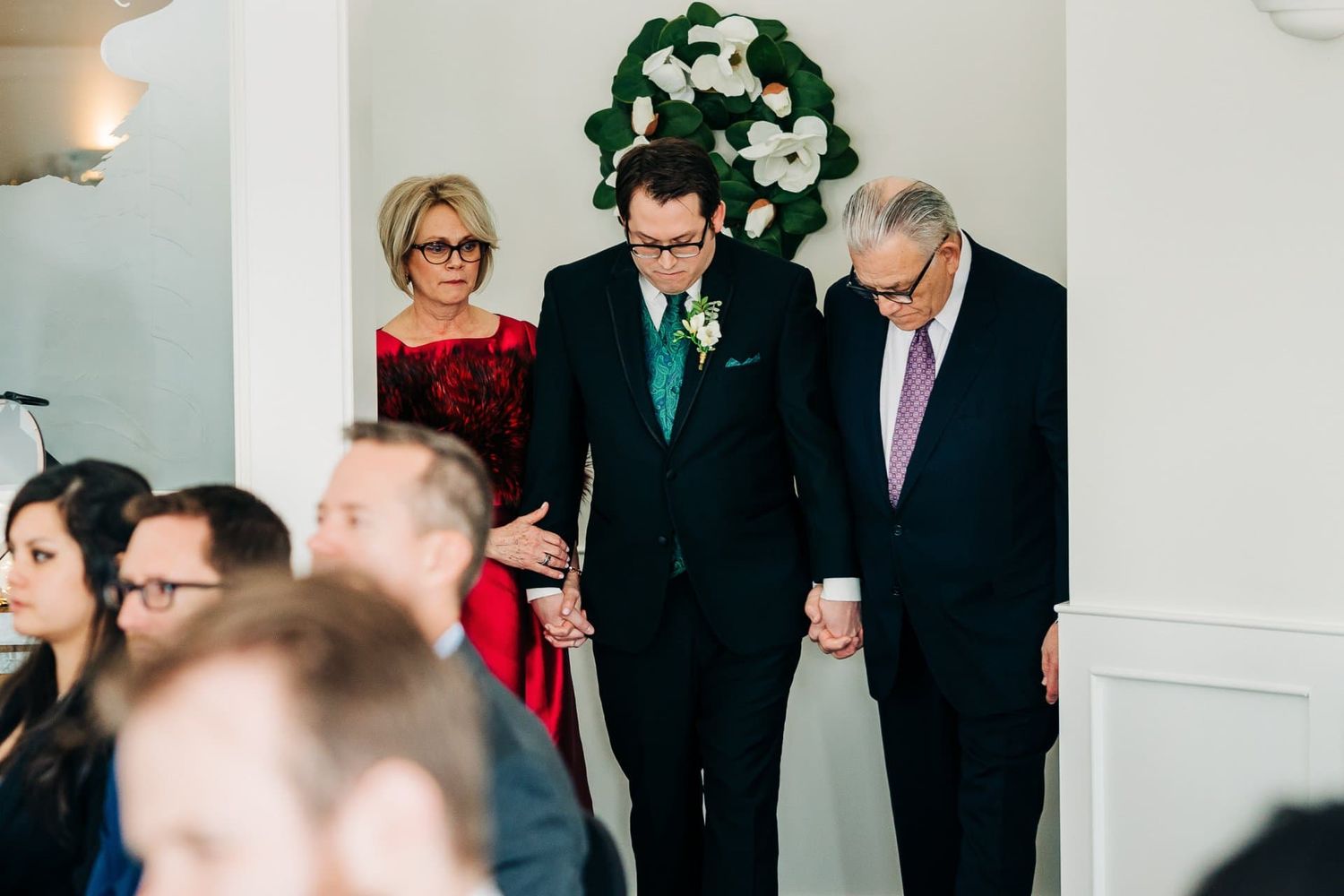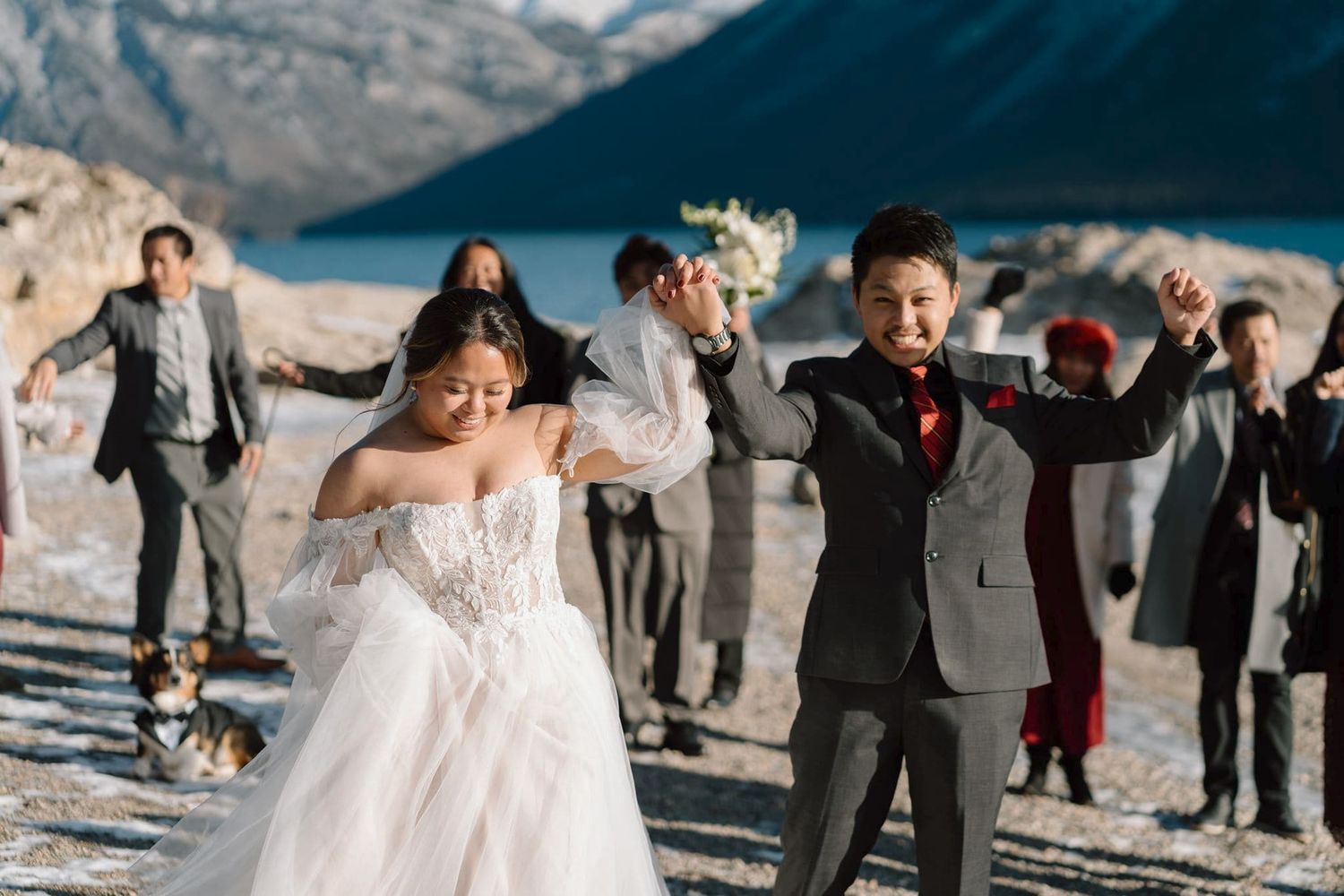
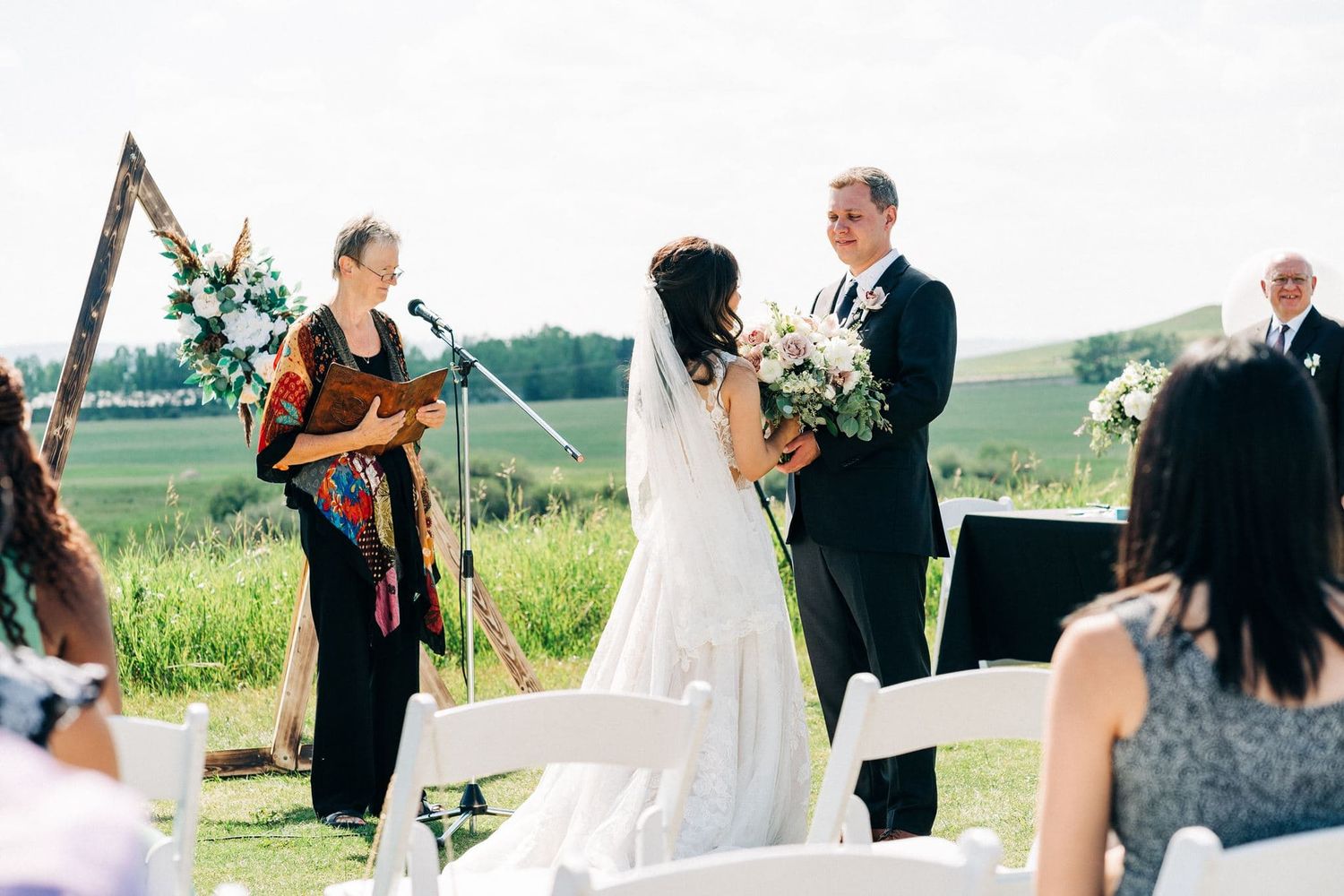
The room goes quiet. You take a breath, reach for each other’s hands, and say words you may have spent months trying to write. Years later, the sound of your voice shaking slightly before the vows may bring you back faster than any image can. So, do videographers record ceremony audio? A professional wedding filmmaker should, and they should treat those words with the same care they give every frame.
For us, ceremony audio is never an afterthought. Your vows, readings, officiant’s message, laughter from the front row, and the applause that follows your first kiss are part of the emotional shape of the day. Without them, a wedding film can still be beautiful. With them, it becomes personal.
Do Videographers Record Ceremony Audio for Every Wedding?
Most experienced wedding videographers record ceremony audio, but the approach and level of coverage can vary dramatically. Some teams rely on a camera-mounted microphone, which can capture a general sense of the room but is rarely enough for clear vows. Others build a dedicated audio plan with multiple sources and backup recordings.
When you are choosing a filmmaker, do not assume that ceremony audio is automatically included simply because video coverage is. Ask how vows and the officiant will be recorded, whether there is a backup, and what happens if a microphone fails. These are small questions with a lasting impact on the film you receive.
At Conquer Your Journey, we see ceremony sound as part of the story, not a technical box to check. A quiet laugh between you and your partner may become the moment that holds the entire film together. The promise spoken through tears may become the line you replay on an anniversary. We want to preserve the truth of it, not replace it with something generic.
How Wedding Ceremony Audio Is Captured
Great sound is often invisible. While you are getting married, a thoughtful filmmaking team should be working quietly around the ceremony’s rhythm, keeping gear discreet and avoiding disruption to the atmosphere you worked so hard to create.
Personal microphones capture the words that matter
A small lavalier microphone is commonly placed on the groom, one partner wearing a jacket, or the officiant. This records close, clear speech without bringing a large microphone into your ceremony space. Depending on the ceremony format and clothing, the team may place a recorder in a pocket, secure it discreetly to an outfit, or use a concealed microphone near the front.
There is no single placement that works for every wedding. A windswept mountain ceremony in Banff calls for different preparation than an indoor celebration in Calgary. Flowing dresses, formal uniforms, cultural garments, and a ceremony with multiple speakers all deserve a plan designed around the people and setting involved.
The officiant and sound system can provide another source
If your officiant is using a microphone or the venue has a sound system, filmmakers may record directly from that system or place a separate recorder near a speaker. This can be especially useful for readings, musicians, and remarks that may not be clearly captured by a microphone on one person.
However, venue sound is not always predictable. A DJ’s board may be unavailable, a live band may be managing the audio, or a system may produce interference. That is why a direct feed is helpful, but it should not be the only plan.
Ambient audio preserves the feeling in the room
Close microphones capture words. Ambient microphones capture the world around them: the shift of guests in their seats, the soft sound of a parent crying, birds in the distance, applause rolling across the ceremony site, or the breath before a kiss.
This layer matters because a wedding film should not feel sterile. It should sound like your wedding actually felt. Used with restraint, natural atmosphere brings you back into the space without overpowering the vows.
Backup recordings protect an unrepeatable moment
Ceremonies do not offer second takes. A professional team plans accordingly by recording from more than one source whenever possible. Batteries can run low, wireless signals can drop, and an unexpected gust of wind can change the sound of an outdoor ceremony in seconds.
Redundancy is not glamorous, but it is an act of care. It gives your filmmaking team options in editing and protects the moments that cannot be recreated once the aisle is empty.
What Can Affect the Quality of Ceremony Sound?
Even a strong audio plan has real-world variables. Wind is often the biggest challenge for outdoor weddings, particularly in open mountain locations. Wind protection on microphones and careful placement can make a meaningful difference, but no one can fully control the weather.
Guest noise can also shape a recording. A crying child, a late arrival, a phone notification, or an enthusiastic whisper may find its way into the ambient track. Usually, these sounds can be softened during editing. Sometimes, though, they are simply part of the honest texture of a live moment.
Venue rules matter, too. Some churches and ceremony spaces have strict policies about where equipment can be placed. Some officiants prefer not to wear a microphone, while others are happy to collaborate. An experienced wedding team communicates early, respects the space, and adapts without making you responsible for solving it on your wedding morning.
If you are planning a multilingual ceremony, personalized readings, live music, or a ceremony in a remote location, mention it during your planning conversations. These details help your photo and video team prepare for the kind of coverage your story deserves.
Will You Hear the Full Ceremony in Your Wedding Film?
That depends on the collection you choose and the filmmaker’s deliverables. A cinematic highlight film usually includes the most meaningful pieces of audio: a line from your vows, a parent’s reading, an officiant’s blessing, or a spontaneous reaction. The purpose is to create an emotional film that moves with the day, rather than document every minute in chronological order.
Some couples also choose a full ceremony edit. This is a longer film that preserves the entire ceremony, including entrances, readings, vows, ring exchange, pronouncement, and recessional. It is especially meaningful for couples who want to revisit every word or share the ceremony with loved ones who could not attend.
Neither option is more meaningful than the other. A short film can hold the essence of your day with cinematic intention, while a full ceremony film protects the complete record. Many couples value having both: one to feel the story and one to revisit it in full.
Questions to Ask Before Booking Your Videographer
You do not need to become an audio expert before your wedding. You only need enough clarity to know your ceremony will be handled thoughtfully. Ask whether the team records vows with dedicated microphones, whether they use backup audio sources, and whether ceremony audio is included in your final films.
It is also worth asking how they handle outdoor wind, readings from family members, venue restrictions, and sound from a DJ or live musicians. If a full ceremony edit matters to you, confirm that it is part of your collection or available as an add-on. Clear answers are a sign that your filmmaker has prepared for more than the best-case scenario.
Most of all, listen for whether they understand why you are asking. You are not just asking about microphones. You are asking whether the words you speak to each other will be safe in their hands.
Your ceremony may pass in a blur of anticipation, joy, and tears. Let yourself be there for it fully. The right filmmaking team will work quietly in the background, preserving the tremble in your voice, the laughter between sentences, and the promises that began the next chapter of your journey.