The thought arrives quietly for many couples: What if we look awkward? What if we do not know what to do with our hands? What if the camera follows us all day? If you want to reduce wedding camera anxiety, the answer is not learning how to perform. It is choosing an experience that makes performance unnecessary.
Your wedding is already full of emotion. There are vows to absorb, people you love in one room, a dress or suit you have waited to wear, and a thousand tiny details moving at once. Photography and film should not add another layer of pressure. They should give you room to breathe, be close, and remember what the day actually felt like.
Why Camera Anxiety Is So Common
Most people are not used to having a camera pointed at them during meaningful moments. A phone photo with friends is one thing. Holding your partner's hand before a ceremony, reading a letter, or sharing your first dance while someone documents it can feel far more vulnerable.
Often, the anxiety is not really about the camera. It is about the fear of being judged or getting a once-in-a-lifetime day "wrong." Couples may worry that they are not naturally photogenic, that they will not look as relaxed as the people they see online, or that the schedule will turn their celebration into a long production.
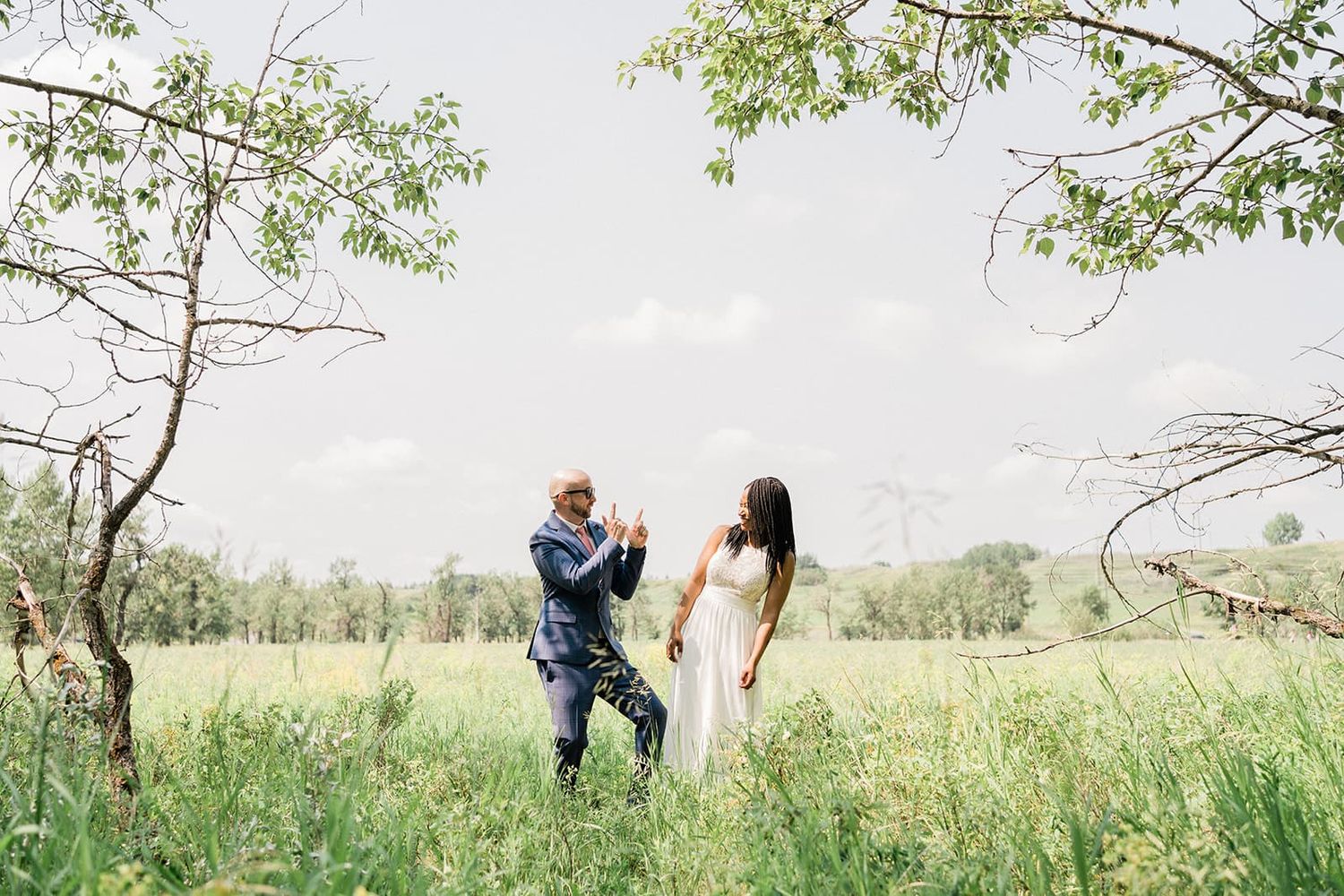
The truth is that a beautiful wedding gallery does not require you to be endlessly poised. It requires images that hold the life already happening between you: the nervous laugh, the hand squeeze, the glance that says more than a pose ever could. Those are not moments you need to manufacture.
Start With a Team You Can Relax Around
The people documenting your wedding have a real effect on how your day feels. Technical skill matters, of course, but comfort matters just as much. Before booking, pay attention to how a photographer or filmmaker communicates. Do they ask about your relationship and what matters to you? Do they describe their process clearly? Do they make space for your concerns without brushing them aside?
A documentary-minded team should know when to guide and when to step back. You may need a little direction during portraits, particularly if you have never been professionally photographed. But direction can be simple and human: walk together, take a breath, look at each other, tell your partner what you are feeling. It should never make you feel like you are acting out someone else's wedding.
At Conquer Your Journey, we believe the safest presence is often a quiet one. We watch for the moments unfolding naturally, then give you the space to remain inside them. That approach is especially valuable for couples who love candid imagery but worry they will freeze once the camera appears.
Have an Honest Conversation Before the Wedding
Tell your team what makes you nervous. Maybe one partner hates being photographed. Maybe you feel self-conscious about crying, laughing loudly, or being the center of attention. Maybe family formals are the part you dread most.
Specific honesty gives your creative team something useful to work with. They can build in more breathing room, offer gentle prompts rather than rigid posing, and make a plan for family photos that is organized without feeling rushed. You do not need to apologize for having nerves. A thoughtful professional expects them.
Build a Timeline That Protects Your Presence
Camera anxiety becomes louder when the timeline is too tight. If every moment is scheduled down to the minute, photos can start to feel like another task to complete rather than part of the experience.
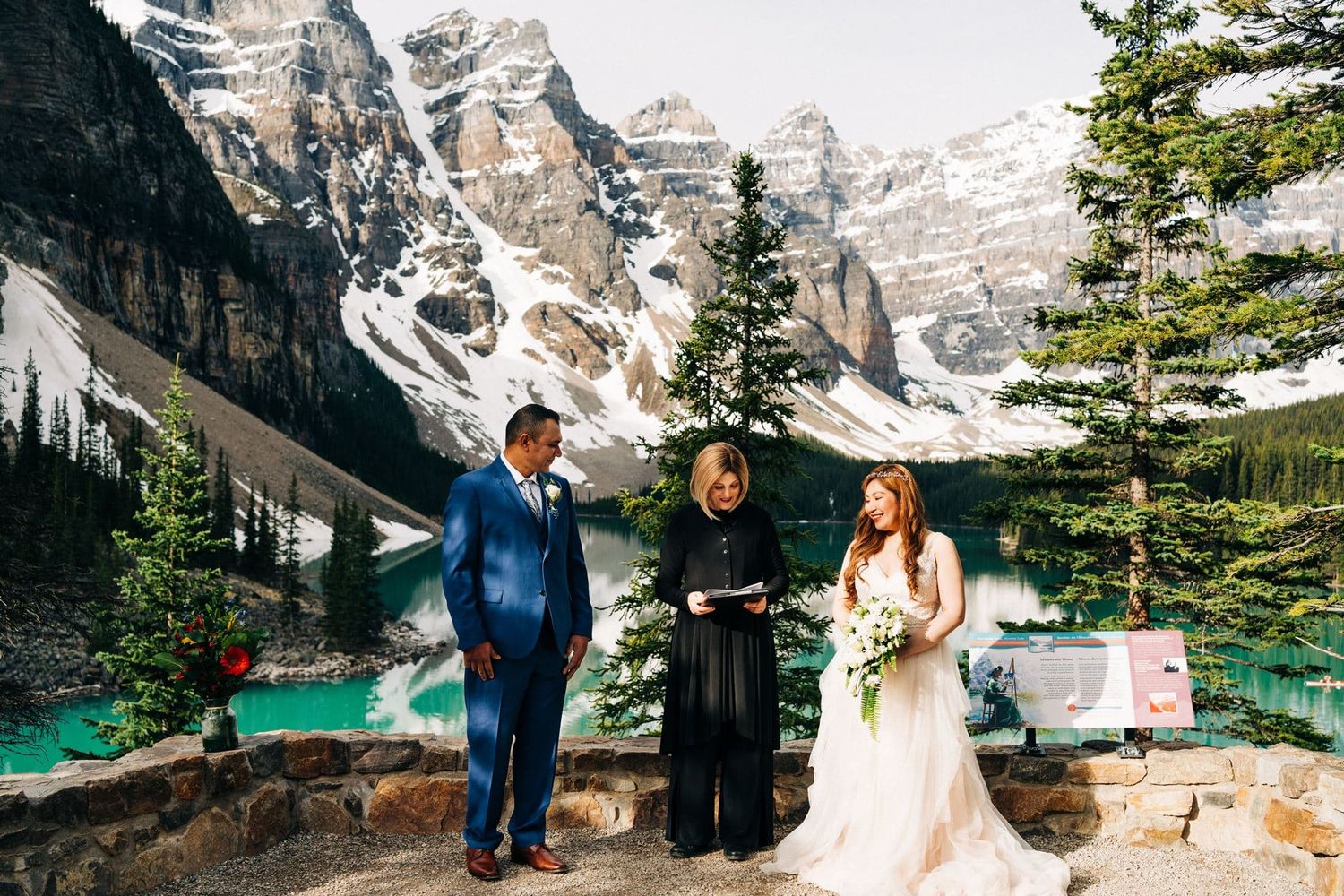
Give yourselves margin. A calm getting-ready morning, a few private minutes after the ceremony, and a portrait window with enough time to move slowly can change everything. In Calgary, Canmore, or Banff, travel time, mountain weather, and changing light can all affect the flow of the day. A realistic plan is not less romantic. It is what allows romance to happen without constantly checking the clock.
This does not mean you need hours of posed portraits. For many couples, 30 to 45 intentional minutes is enough when expectations are clear and the location is close by. If you want a longer creative session in the mountains or at a meaningful place, it may be worth protecting more time. It depends on what you value most, but the goal remains the same: create room to be together, not room to perform.
Consider a First Look If It Feels Right
A first look is not for everyone. Some couples deeply value seeing each other for the first time during the ceremony, and that anticipation can be powerful. Others find that a private first look settles their nerves and gives them a moment that belongs only to them before the day gathers speed.
From a camera-anxiety perspective, it can also be a gentle beginning. You are not immediately standing in front of guests. You get to reconnect with your person, cry if you need to, laugh if you need to, and become familiar with the cameras in a quieter setting. Then, portraits feel less like an interruption and more like a continuation of that private moment.
Reframe Portraits as Time Together
The fastest way to make portraits feel awkward is to think of them as a test. You are not being graded on your posture, your smile, or whether you know your best angle. Portrait time is a pause in a day that can otherwise pass in a blur.
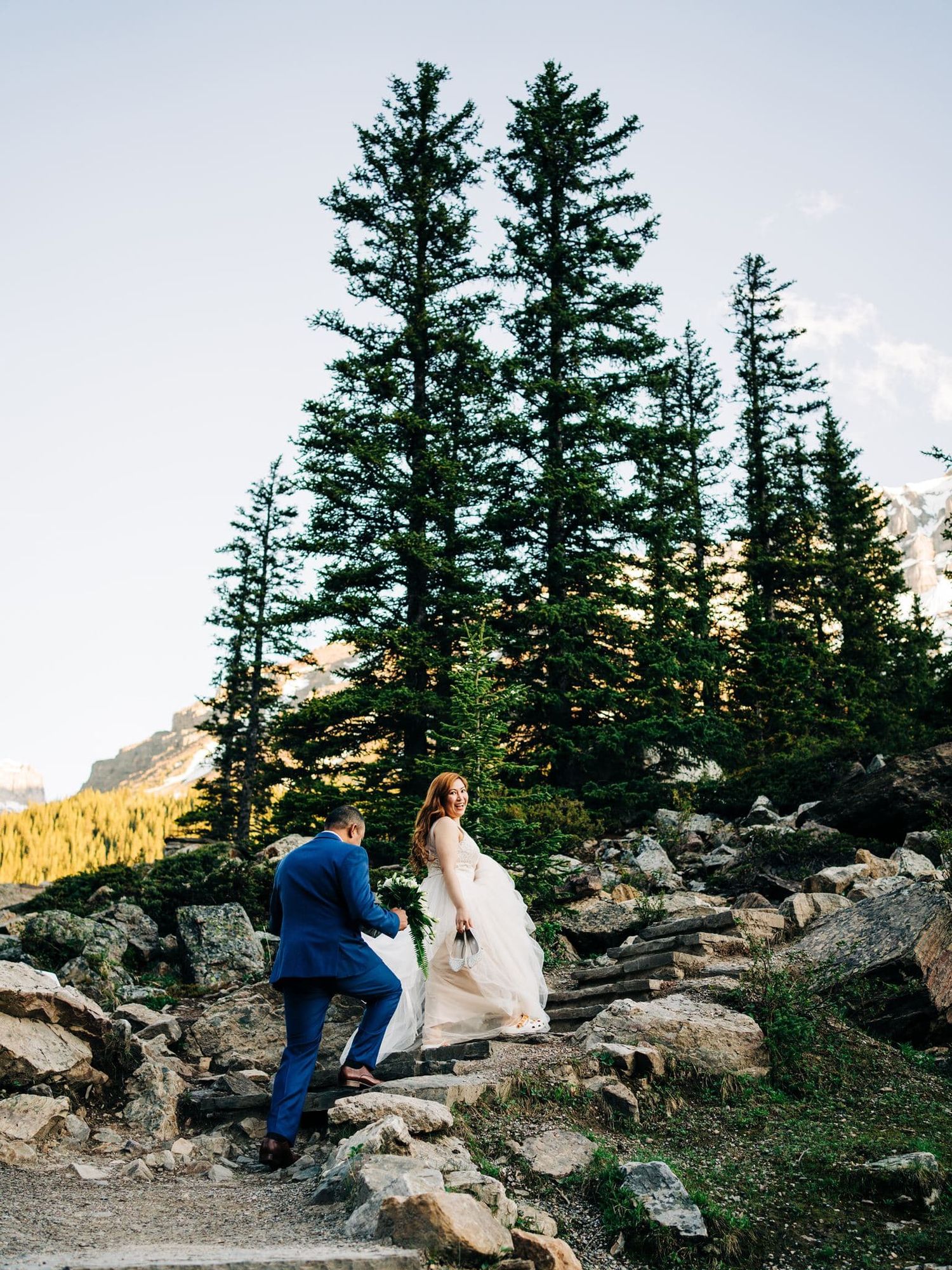
Instead of asking, "What should we do?" try asking, "What do we want to remember?" Maybe it is the way your partner looks at you when no one is speaking. Maybe it is the wind catching your veil on a Banff overlook, your hands wrapped around each other in the cold, or the sudden relief of being married at last.
Good direction is usually less about posing and more about giving you somewhere to place your attention. Look at your partner instead of the lens. Walk without needing to arrive anywhere. Hold each other close for a moment longer than feels necessary. Real connection gives your hands, your face, and your body something honest to do.
Let Go of the Need to Look Perfect
A camera can make us aware of every detail we would normally ignore. But the images that become heirlooms are rarely the most flawless ones. They are the ones that carry feeling.
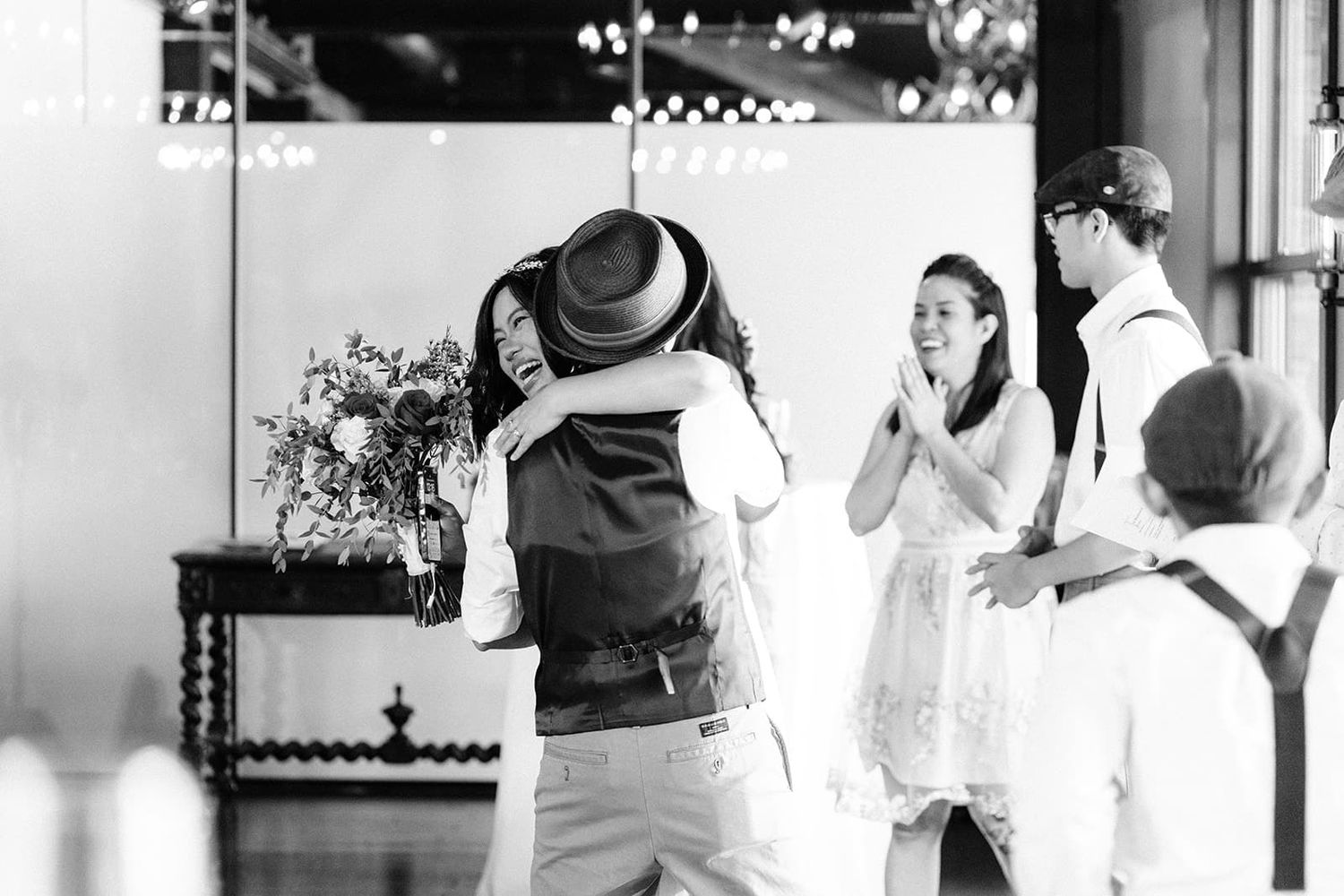
Your hair may move in the wind. Your father may cry in a way that makes you cry too. You may laugh during your vows because your partner says something only you would understand. These are not disruptions to a perfect visual story. They are the story.
Trying to control every expression can pull you away from the people in front of you. Give yourself permission to be visibly moved. A photo of an unguarded tear or a wide, unpolished laugh will often take you back more completely than a perfectly composed smile ever could.
Practice Being Seen in Small Ways
If being photographed feels intensely unfamiliar, a small amount of practice can help. Take a few phone videos together while cooking dinner, walking your dog, or telling a story from your week. The point is not to critique yourselves afterward. It is to notice that the camera can exist while you continue being yourselves.
An engagement session can offer the same benefit, especially if you want to build trust with your photo and film team before the wedding. It is not mandatory, and some couples would rather save their energy for the day itself. But for those who feel anxious, it can replace uncertainty with a comforting sense of familiarity.
Keep Your Wedding Party and Family Expectations Clear
Even couples who feel comfortable with their creative team can become tense when a crowd begins offering directions. Well-meaning relatives may ask for extra photos, pull you away mid-conversation, or insist that you smile differently. A simple plan can protect your energy.
Choose a family member, planner, or trusted friend who can help gather people for formal photographs. Share a concise list of must-have combinations before the wedding. Then let your photography team lead the process. When everyone knows there is a plan, you do not have to manage people while trying to stay emotionally present.
The same goes for your wedding party. Let them know that they do not need to create a performance for the camera. The best group photos usually come after the formal frame, when everyone exhales, jokes, fixes a boutonniere, or reaches for a drink together.
Remember What the Camera Is Really There For
The camera is not there to inspect you. It is there to preserve what you may not have the capacity to notice while you are living it.
Years from now, you may return to the small things: your grandmother watching from the front row, your friends erupting during the reception, the way your partner reached for your hand after the ceremony. If you choose a Same-Day Edit film, you may even get to feel some of that memory arrive while the celebration is still unfolding, surrounded by the people who made it meaningful.
So when the nerves show up, do not fight them into silence. Take your partner's hand. Feel your feet on the ground. Look at the person you came to marry, not the lens nearby. You do not have to be camera-ready to be fully, beautifully present.