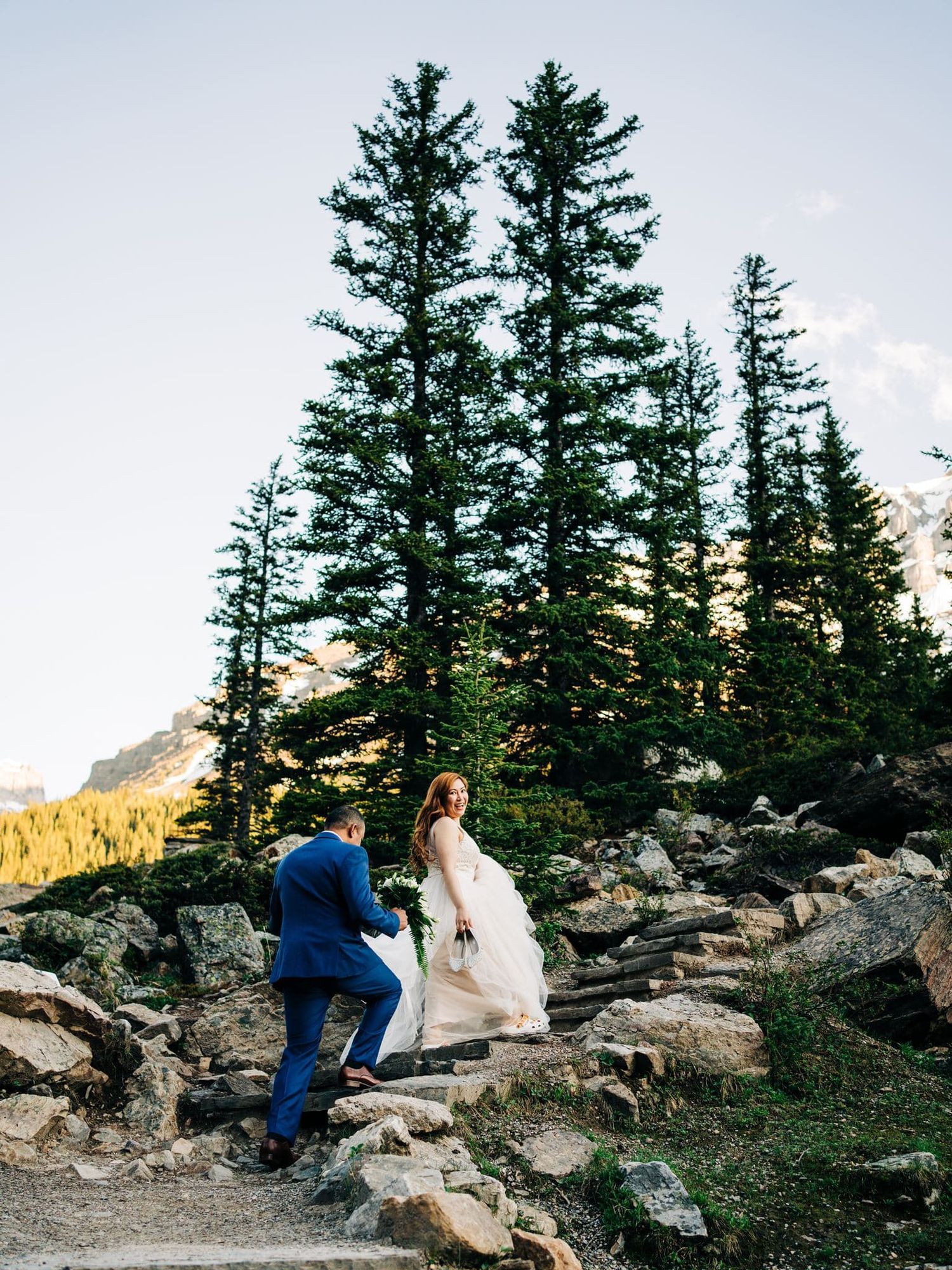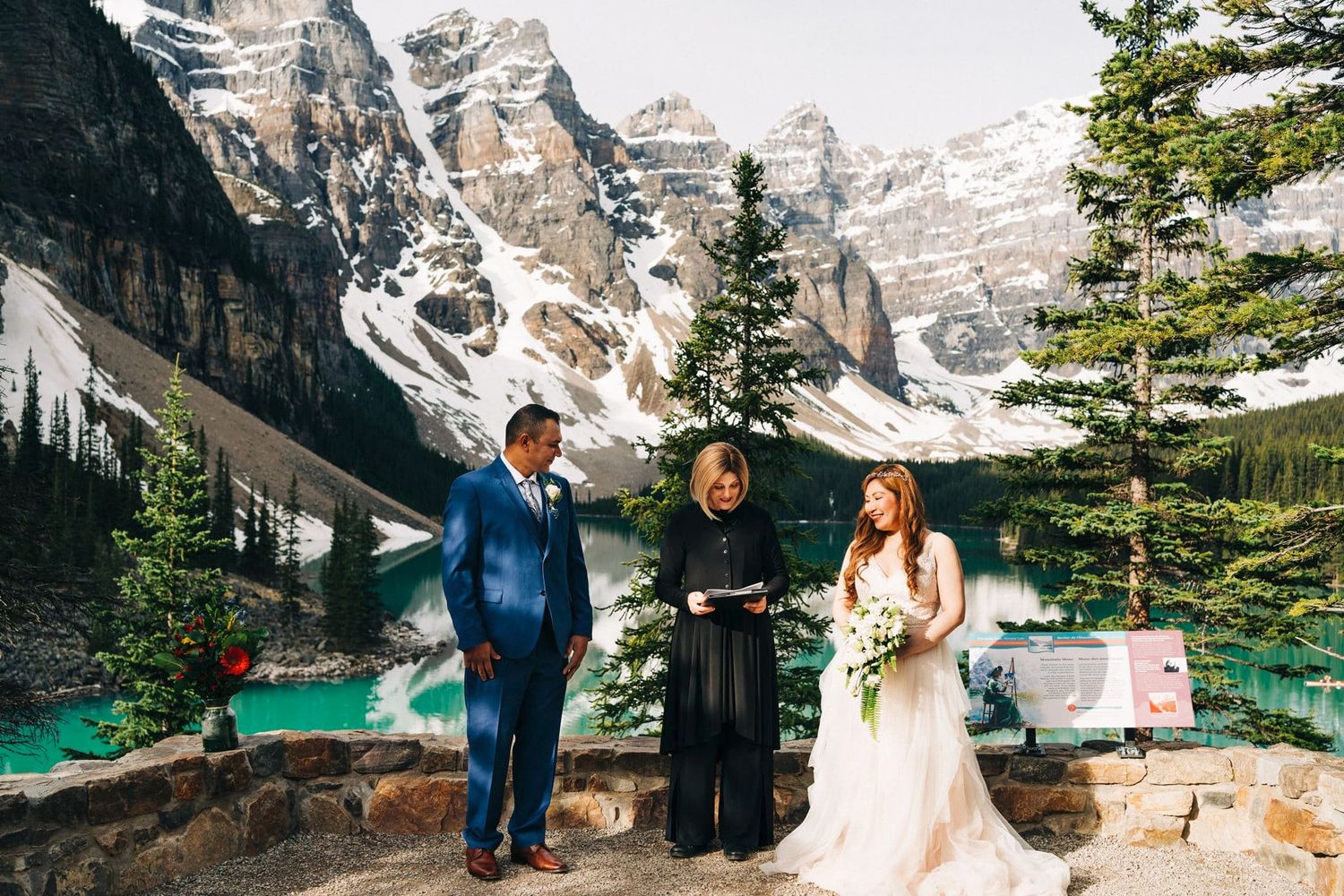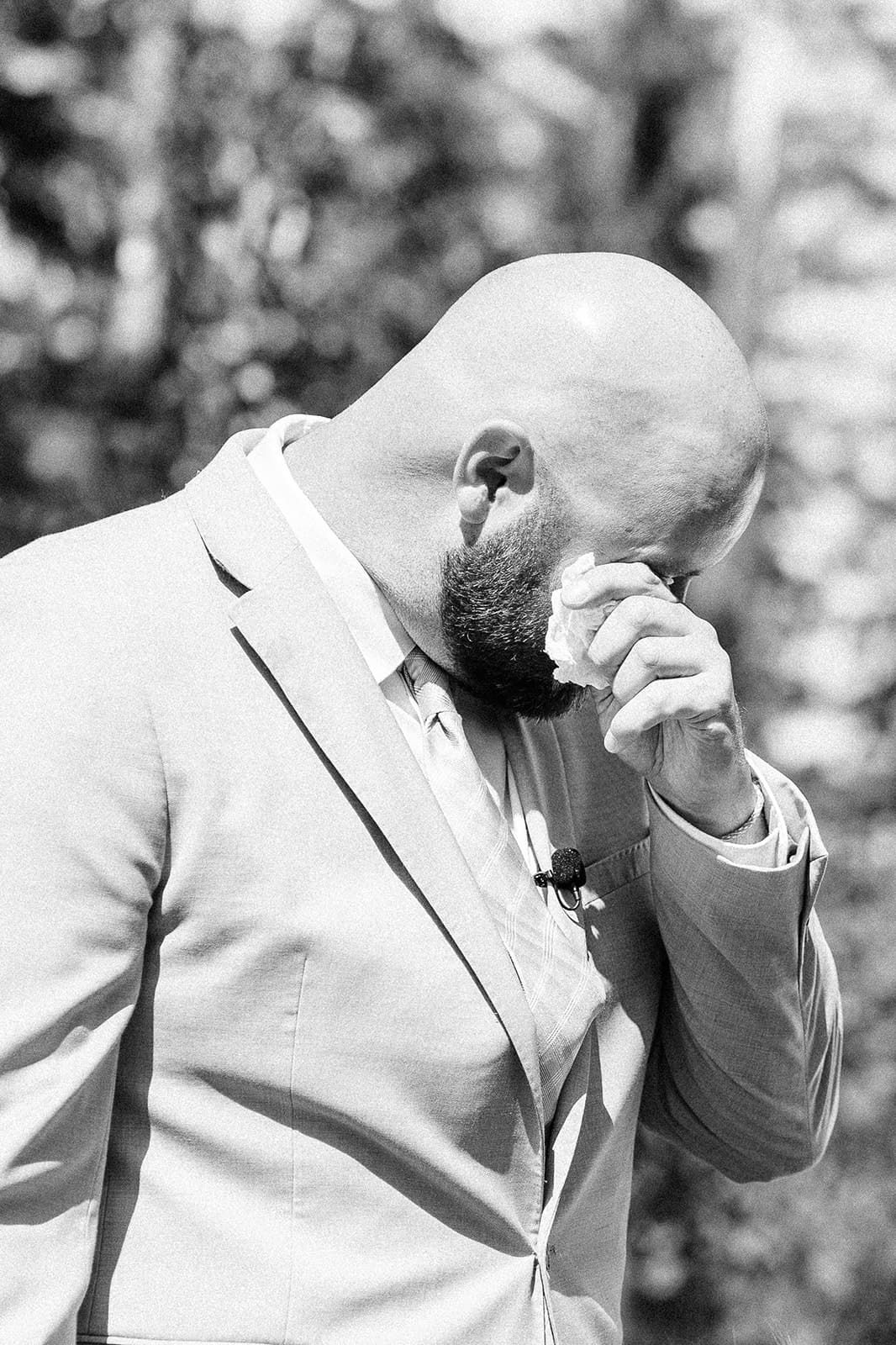
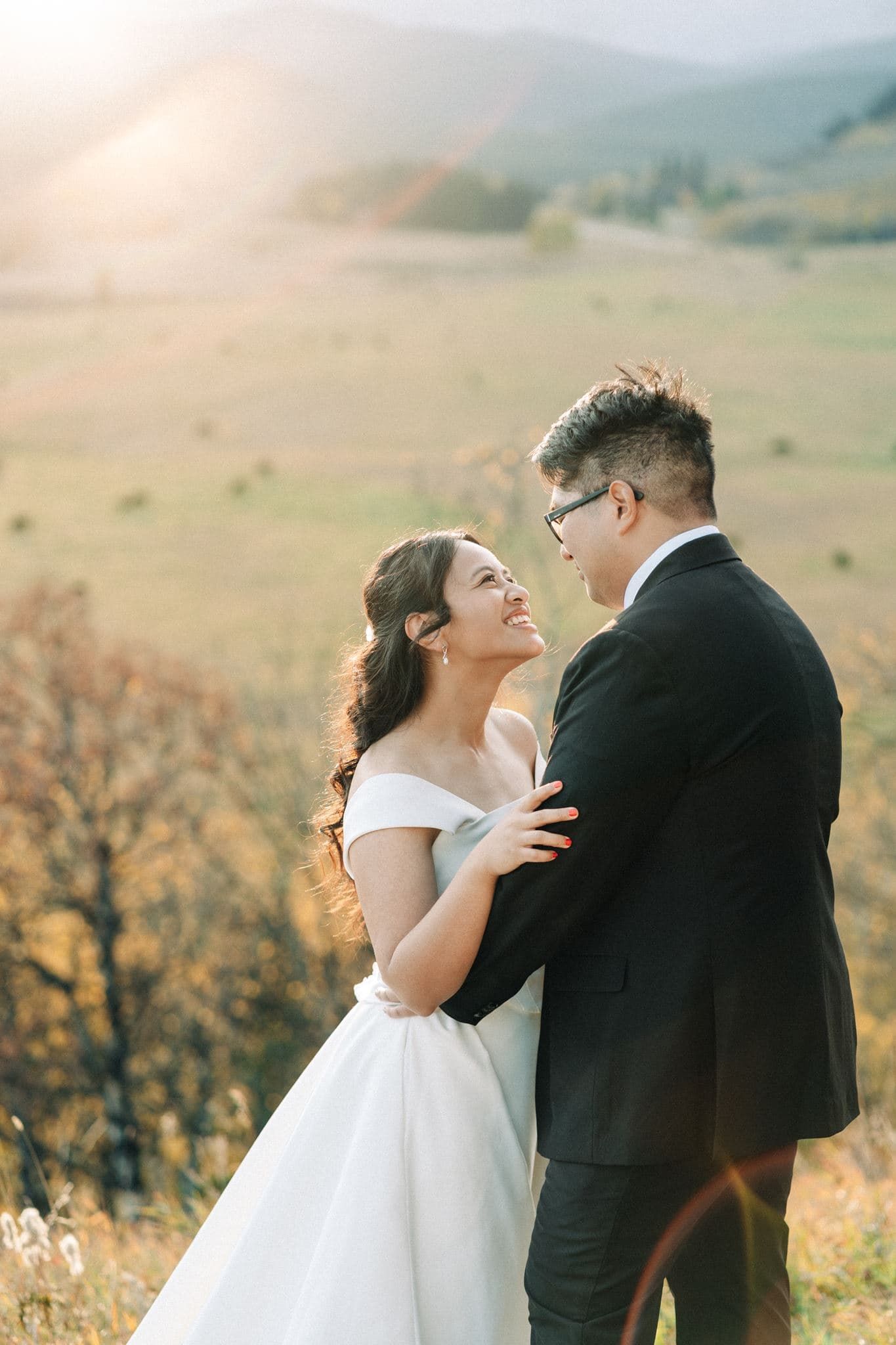
The sun has slipped behind the Rockies, your guests are settling into dinner, and for ten quiet minutes, the noise of the day falls away. This is why couples choose to schedule sunset wedding portraits. Not for a perfectly posed performance, but for a brief chance to breathe together, hold hands, and feel the weight and joy of what just happened.
Golden-hour portraits can be some of the most visually striking images from a wedding day. But beautiful light alone is not the point. The real value is the pause: a small pocket of time that lets you reconnect before the reception carries you into speeches, dances, hugs, and the full rush of celebration.
The key is to protect that time without making the rest of the day feel built around a photo shoot.
Why Sunset Portraits Feel Different
Light near sunset is gentler than the hard midday sun. It wraps around skin, softens the landscape, and gives movement a little more depth. In Banff, Canmore, and Calgary, it can turn an ordinary patch of open space into something cinematic, whether that means mountain silhouettes, a field catching the last light, or the warm glow outside a reception venue.
But the photographs are not meaningful because the sky happened to be pink. They matter because sunset often arrives after the ceremony, after the nerves have lifted, after you have finally had a chance to say, “We did it.” You are no longer anticipating the day. You are inside it.
That emotional shift is what we look for. A hand reaching for another hand. The way you laugh when no one has asked you to laugh. The few seconds when you lean into each other and forget the camera is there. Sunset gives those moments room to exist.
Start With the Actual Sunset Time
The best way to schedule sunset wedding portraits is to begin with the date and location, not a generic timeline template. Sunset changes dramatically through the year in Alberta. A summer wedding may have light well into the evening, while a fall celebration can lose daylight much earlier than couples expect.
Look at the official sunset time for your exact wedding date and venue, then plan to begin portraits roughly 45 to 60 minutes beforehand. You do not need to use the entire hour. In fact, most couples are happiest with about 15 to 25 minutes away from guests, especially if they have already had a relaxed portrait window earlier in the day.
This earlier window matters. Sunset should not carry the burden of creating every formal portrait, every wedding party image, and every family grouping. Those photographs deserve their own organized space in the timeline. When sunset is reserved mostly for the two of you, it stays calm and unforced.
There are exceptions. If your ceremony ends very close to sunset or your venue is in a narrow mountain valley where light disappears early, your photographer may recommend moving the portrait time sooner. The visible sun can vanish behind a ridge well before the published sunset time. A local team who understands the landscape can help you plan for the light you will actually have, not just the number on an app.
Place the Portrait Window Around Dinner, Not Against It
For most reception timelines, the smoothest sunset portrait window falls after guests have been served their main course and before speeches or shortly before the final stretch of them. Your guests are occupied, seated, and enjoying the meal. You are not disappearing during a major moment, and you are less likely to feel guilty about stepping away.
A short exit during dinner also protects the energy of the reception. You can return refreshed and ready to be present for the people who came to celebrate with you. The goal is never to pull you from your own party for an hour. It is to create a natural breath between chapters of the day.
Talk with your planner, venue coordinator, photographer, and videography team about the exact flow. If you have a Same-Day Edit planned, this coordination becomes even more valuable. The team needs to protect the creative work happening behind the scenes while ensuring you are available for the moments that belong to you. A clear timeline lets the surprise feel effortless when it plays later in the evening.
Build in Flexibility for Weather and Real Life
A wedding timeline is a guide, not a contract with the sky. Clouds can create extraordinary soft light, rain can arrive without warning, and a delayed ceremony can shift everything. The best plan has a sunset portrait window, plus a backup mindset.
If rain is light and you are comfortable stepping outside, a few minutes under clear umbrellas or beneath a covered entrance can create images with atmosphere and honesty. If conditions are unsafe or miserable, there is no need to force it. Window light, candlelit interiors, covered patios, and the energy of a reception room can be just as memorable when photographed with intention.
This is also why we encourage couples not to obsess over a specific visual reference. You cannot order a particular sky. What you can create is enough margin in your schedule to respond to the day as it unfolds. Sometimes the clouds break for five minutes. Sometimes the best portraits happen after blue hour, when the venue lights come on and the celebration feels intimate and alive.
Keep the Location Close
A sunset portrait session should not require a complicated relocation unless the landscape is central to your wedding experience and the timeline genuinely allows for it. Every extra drive involves loading into a vehicle, navigating traffic, adjusting attire, and losing precious light.
For many weddings, the strongest option is only a few steps away: a quiet side of the venue, an open field, a terrace, a tree-lined path, or a mountain-facing overlook nearby. Familiarity helps, but proximity is often more valuable than a famous viewpoint. When the location is close, you can slip out, be together, and return before anyone has time to wonder where you went.
If a destination location is non-negotiable, account for the full travel time both ways, parking, walking distance, and a cushion for delays. A photographer can make a modest setting feel extraordinary. They cannot create more daylight once it is gone.
Tell Your People Before the Day Begins
A simple note to your wedding party, planner, DJ, and immediate family can protect your portrait window without making it feel rigid. Let them know that you plan to step away briefly around sunset and that you would like to avoid being pulled into last-minute group photos, questions, or logistical decisions during that time.
You do not need to announce it to every guest. The people managing the day only need enough awareness to keep things moving while you are away. Your DJ can time an easy transition, your planner can hold any non-urgent questions, and your family can feel confident that you will be back shortly.
This small boundary is not selfish. Your wedding day is generous by nature, full of giving your attention and affection to the people you love. Taking twenty minutes to be with your new spouse is part of honoring the day, too.
Let the Portraits Be About You, Not a Pose List
You do not need to arrive at sunset with a folder of poses and a fear of doing it wrong. The best images usually begin with simple direction: walk slowly, stay close, look at each other, take a moment. From there, the photographs become about what naturally happens between you.
Some couples want to talk and laugh. Others are quiet, overwhelmed, or emotional. Both are welcome. There is no correct way to be in love on your wedding day. A documentary-minded photo and film team will give enough guidance to make you feel comfortable, then leave space for your real connection to take over.
Your clothing, footwear, and comfort matter here, too. If you are wearing heels and the chosen area has uneven ground, bring an easy pair of shoes for the walk. If the evening will be cold, have a coat or wrap nearby. Being warm and steady on your feet is more valuable than pushing through discomfort for a single image.
Make Room for the Moment You Will Actually Remember
When you schedule sunset wedding portraits with care, the result is more than a beautiful set of images. It is a memory inside the memory. Years later, you may not recall the exact minute you stepped outside, but you will remember the relief of being together, the sound of the reception behind you, and the way the day finally felt real.
Let the light be a reason to pause, not another demand on your attention. If you give yourselves that small, protected space, the photographs will have something far more lasting than a perfect sunset: the truth of the two of you, fully present in the day you chose to share.