The part no one tells you about wedding planning is that your timeline shapes more than logistics. It shapes how your day feels. A thoughtful wedding photo and film timeline guide is not about turning your wedding into a production schedule. It is about protecting the moments you actually want to live - the deep breath before you walk in, the way your partner looks at you during vows, the unplanned laughter at dinner, the quiet just after sunset when it all finally lands.
When the timeline is rushed, even the most beautiful wedding can feel like a blur. When it is built with intention, your photos and film have room to tell the truth of the day. Not just what it looked like, but what it felt like.
Why a wedding photo and film timeline guide matters
Photography and videography do not just need time. They need the right kind of time. Documentary-style coverage depends on space for real interactions to unfold naturally. If every part of the day is packed too tightly, you end up moving from one checkpoint to the next instead of being present inside your own story.
This is especially true if you care more about authentic coverage than heavily posed images. Candid storytelling cannot be rushed on command. It happens in the in-between moments - while your friends help you into your dress, while your parents try not to cry, while the wind catches your veil outside a mountain venue near Banff. Those moments need breathing room.
That does not mean your schedule has to be long or overly formal. It means it should be honest about what each part of the day requires.
Start with the feeling you want, not just the checklist
Before you map out exact times, ask a simpler question: how do you want the day to move?
Some couples want a slow morning, private vows, and a celebration that feels relaxed from beginning to end. Others want a packed dance floor, a big wedding party, and sunset portraits in a dramatic location. Neither is better. But each one needs a different timeline.
If you start only with logistics, your day can quickly become a list of tasks. If you start with experience, the schedule becomes a tool that supports the atmosphere you are trying to create.
A good timeline makes room for both beauty and honesty. It accounts for travel, family dynamics, weather, touch-ups, transitions, and the fact that people are human and weddings rarely run to the minute.
The ideal flow for wedding photo and film coverage
Getting ready
This part of the day deserves more time than most couples expect. Hair and makeup delays are common, and the final half hour before getting dressed tends to disappear quickly. If you want calm, candid coverage of details, letter reading, gift exchanges, and those last moments with your closest people, build margin into the morning.
For photo and video together, getting ready coverage often works best when there is enough time to document the environment, the details, and the emotional interactions without hurrying you into the next event. If everything is already behind schedule before you are dressed, the stress can follow the rest of the day.
First look or separate reveal moments
A first look is not a requirement. It is a choice about pacing.
If you choose one, you gain privacy, a chance to settle nerves, and more flexibility for portraits before the ceremony. This often makes the rest of the day feel more open. If you prefer to wait until the aisle, that can be incredibly powerful too, but it usually means more portrait time needs to happen later.
There are other options that still preserve the ceremony reveal. You can read private vows back-to-back, hold hands around a corner, or share a quiet moment without fully seeing each other. These moments translate beautifully on film because they carry real anticipation without forcing anything.
Wedding party and couple portraits
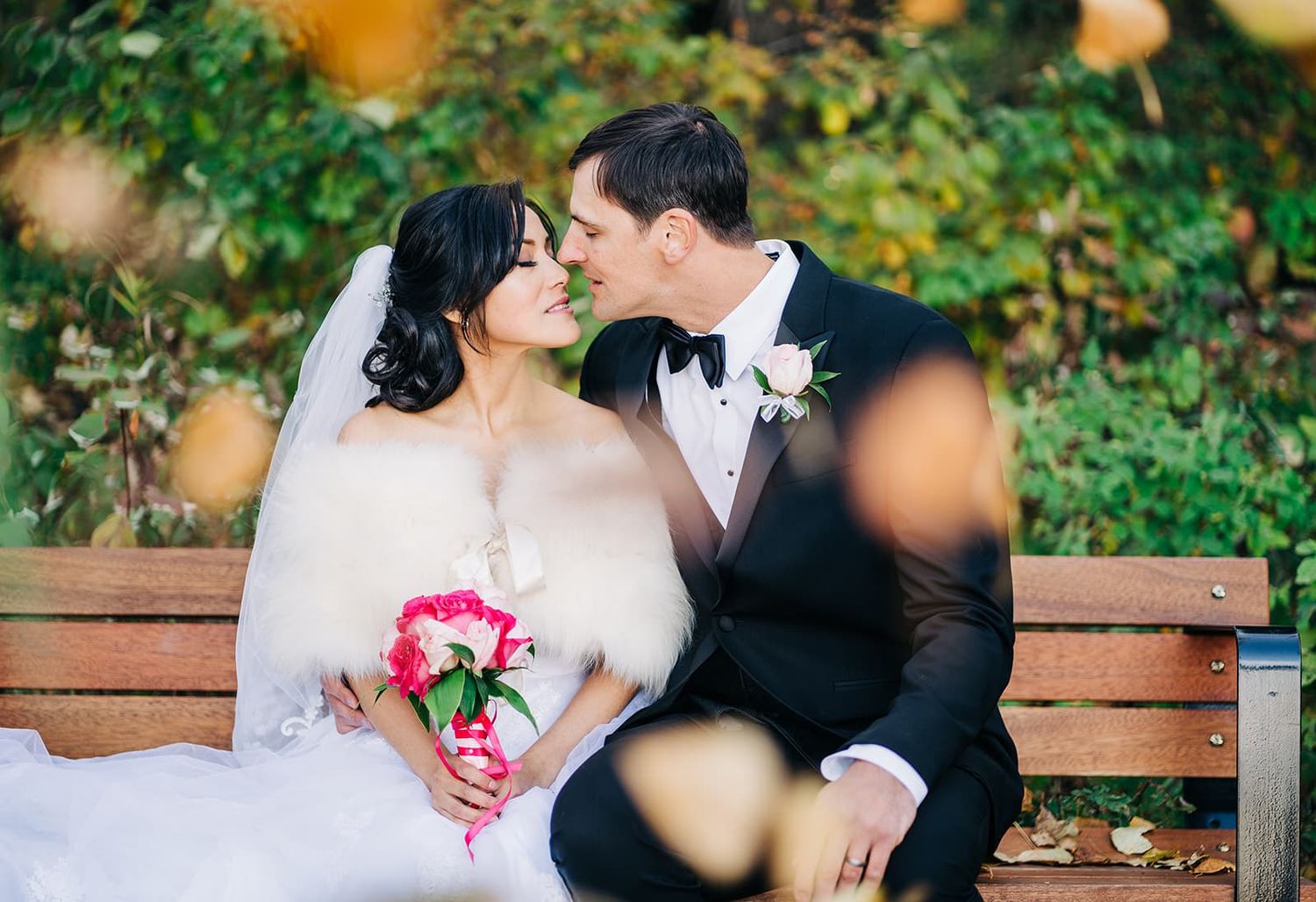
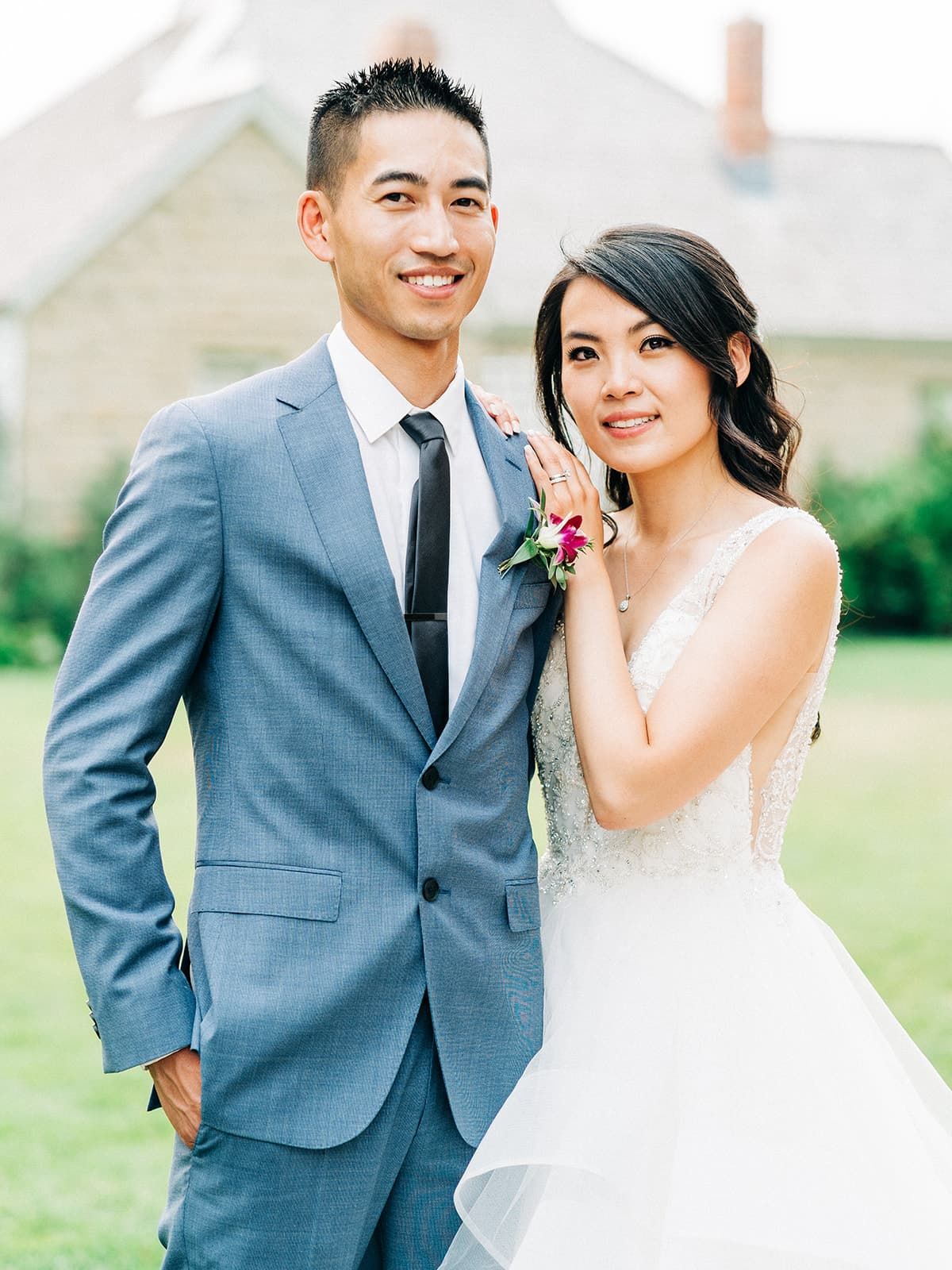
Portraits are where timing and light matter most, but they do not need to feel stiff. The best portrait blocks are long enough for you to relax into them. If you only allow ten or fifteen minutes, everything feels rushed. If you allow intentional space, your images can feel natural, cinematic, and true to your connection.
That said, portrait time depends on your priorities. A couple who wants sweeping landscape images in Canmore or Banff may need more travel and walking time than a city celebration with everything in one venue. A larger wedding party also needs more buffer than an intimate elopement-style gathering.
In most cases, splitting portraits into two shorter blocks works better than doing everything at once. One block earlier in the day gives you structure. A second block around sunset gives you atmosphere.
Ceremony
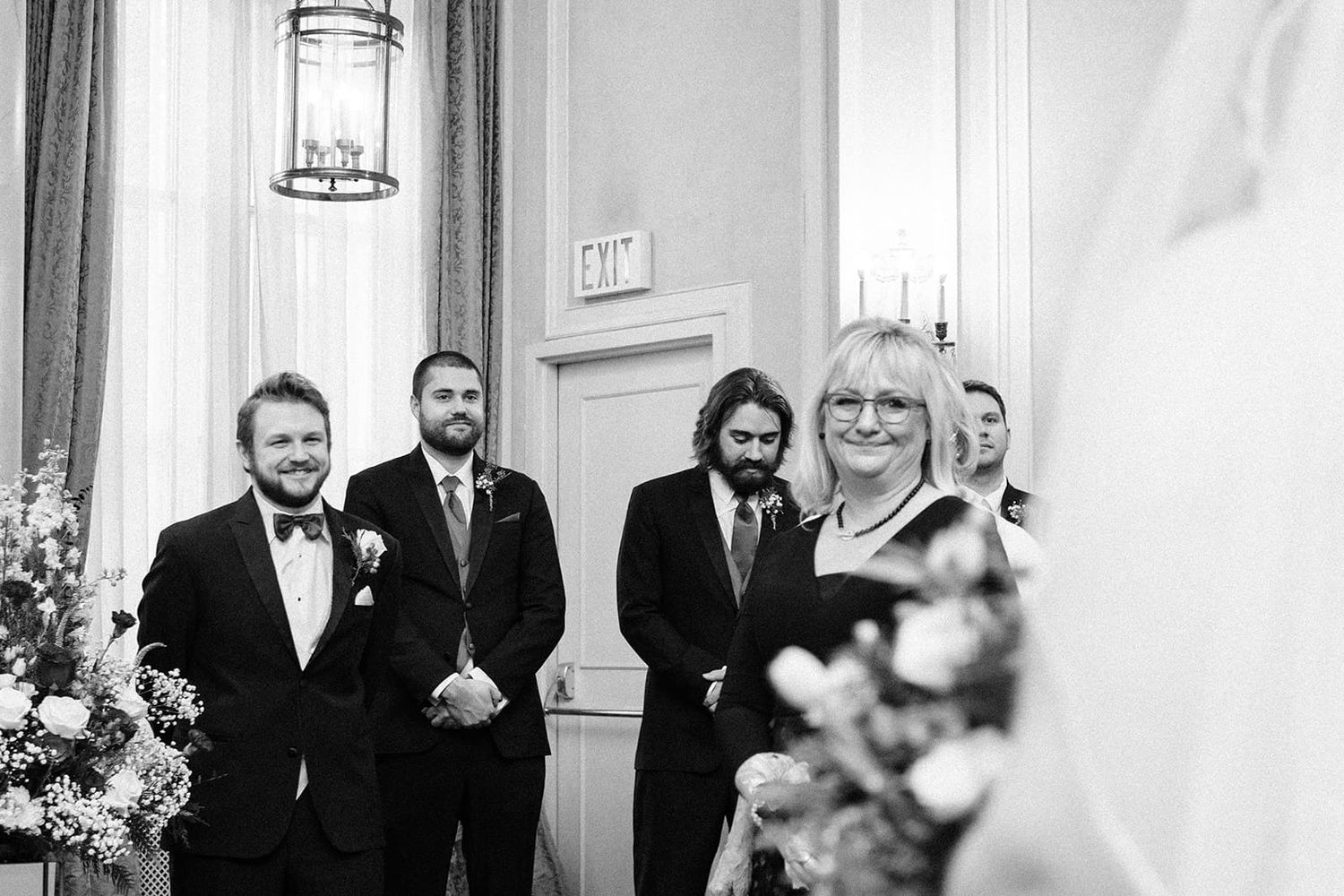
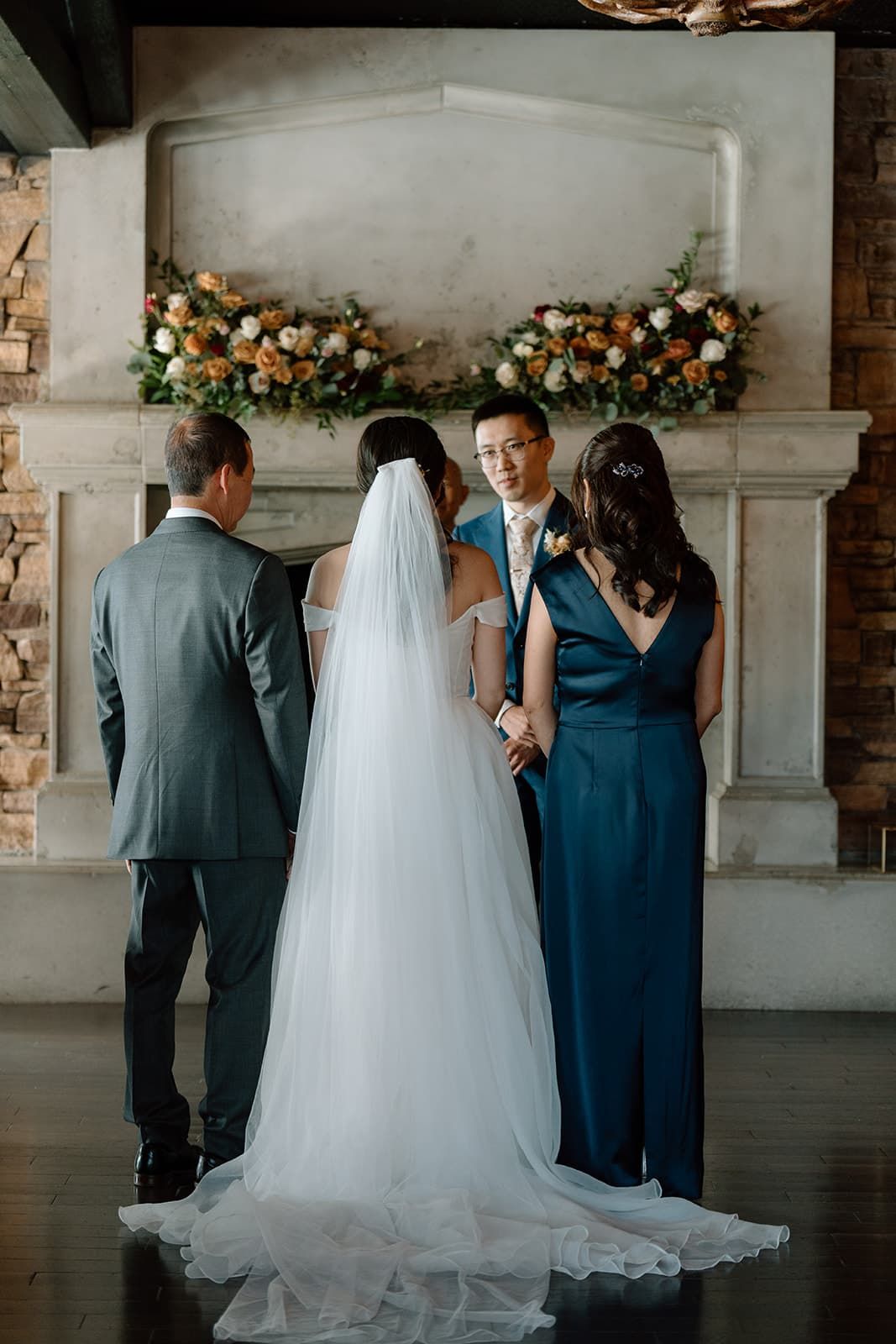
Ceremonies often run shorter than expected, but the lead-up and exit matter just as much. Guests arriving, music beginning, your partner waiting at the front, the hug after the recessional - these are key story moments.
Try not to plan anything too tightly before or after the ceremony. Give yourselves a cushion. This protects the emotional pace of the day and allows your team to capture the transition naturally instead of chasing the clock.
Family photos
Family portraits are usually the least glamorous part of the timeline, but they are deeply important. They are also where delays happen fastest.
The simplest way to keep them efficient is to create a specific list in advance and assign one person who knows both families to help gather everyone. Without a plan, this section can eat into cocktail hour or couple portraits.
Keep the list focused on the groupings that matter most. You do not need every possible combination. You need the ones you will still care about decades from now.
Cocktail hour and reception details
If your photographer and videographer are telling the full story, cocktail hour matters. It is often when the day softens. Guests hug, laugh, grab a drink, and settle into celebration mode. These interactions add life to your gallery and your film.
Reception detail coverage also needs a small window before guests enter the space. If you have spent months choosing florals, candlelight, stationery, and design touches, make sure the room is finished before the doors open.
Sunset portraits
If there is one part of the timeline worth protecting, it is this.
Sunset portraits are not about disappearing from your party for an hour. Usually, a short window is enough. What matters is that you step away together, breathe, and let the reality of the day catch up with you. That pause often creates some of the most emotional imagery of the entire wedding.
For film especially, sunset gives movement and softness that is hard to recreate at any other time. It is less about perfect light and more about giving yourselves one quiet chapter inside a very full day.
The biggest timeline mistakes couples make
The most common mistake is underestimating transitions. Moving between locations, getting everyone into place, bustling a dress, finding family members, and waiting for transportation all take time. None of it feels significant in the moment, but together it changes the pace of the day.
The second mistake is planning every minute. A wedding should have rhythm, not constant pressure. If your schedule leaves no room for weather shifts, emotion, traffic, or simply being human, something always pays the price. Usually it is your ability to be present.
Another issue is assuming photo and video can work from a generic timeline. They can document it, yes, but if storytelling is the priority, your schedule should be shaped with coverage in mind. A custom timeline creates better conditions for honest images and a stronger film.
How much time should you really set aside?
It depends on your wedding, and that answer is not vague - it is practical. A single-location celebration with a small guest count can move beautifully with less coverage time. A wedding with multiple venues, a large family list, cultural traditions, or extensive travel needs more space.
If you are planning a mountain wedding, for example, the scenery is incredible but timelines often need extra flexibility for distance, terrain, and shifting light. What looks close on a map can take longer in real life.
This is why cookie-cutter timelines rarely serve couples well. The right one is built around your people, your priorities, and the kind of story you want preserved.
A better way to build your timeline
Start with your fixed points - ceremony time, reception start, travel, and any traditions that cannot move. Then build outward from the moments that matter most emotionally. Maybe that is a first look with your dad, private vows, sunset portraits, or extra time on the dance floor. Protect those first.
After that, add buffers. Not because you expect the day to go wrong, but because margin creates peace. Peace changes how you feel, how you interact, and ultimately how your memories are captured.
This is one of the quiet advantages of working with a team that handles both photo and video. Instead of two separate vendors interpreting the day from different angles, the coverage can be shaped together from the beginning. The result is not just efficiency. It is a more coherent story.
At Conquer Your Journey, that is how we think about timelines - not as rigid schedules, but as emotional architecture for a day you only get once.
Your wedding does not need to be rushed to be beautiful, and it does not need to be overproduced to be unforgettable. Give the day enough space to breathe, and the moments worth remembering will find you.